· 9 min read
30, 90 and 180 day plan for DVSA changes 2026 for UK operators
Translate DVSA changes 2026 into action. A UK transport manager's 30, 90 and 180 day plan to secure OCRS, meet new tachograph rules and be audit ready.
30, 90 and 180 day plan for DVSA changes 2026 for UK operators
DVSA is stopping more high-risk vehicles at the roadside than ever, and 2026 brings updated Earned Recognition standards plus new tachograph rules for smaller international lorries. The single biggest action for any transport manager: check your Operator Compliance Risk Score today, and make sure tachograph downloads and driver records are current before an examiner asks for them.
TL;DR:
- DVSA now targets more high-risk OCRS red-rated vehicles at roadside than low-risk ones, increasing the importance of maintaining a good compliance score.
- From July 2026, light vans used internationally for hire or reward between 2.5 and 3.5 tonnes must be fitted with tachographs, especially affecting small operators on cross-border work.
- Digital, timestamped records are now essential for compliance, with tachograph downloads due every 28 days for driver cards and 90 days for vehicle units, to avoid straightforward enforcement penalties.
- Regularly monitoring your OCRS and building a strong Earned Recognition evidence base can help reduce roadside interventions and demonstrate compliance to inspectors.
- Using automated compliance tools that produce exportable, audit-ready data is crucial for quick response during inspections, prohibitions, or public inquiries.
Table of Contents
- What changed in 2026: DVSA enforcement, OCRS and tachograph scope
- What these changes mean for your compliance priorities
- Your 30, 90 and 180-day action plan
- Monitoring OCRS and Earned Recognition day to day
- Preparing for audits, prohibitions and public inquiries
- Why compliance deserves a seat at board level
- OperatorCompliance: built for the way DVSA checks you now
- Sources
- FAQ
What changed in 2026: DVSA enforcement, OCRS and tachograph scope
DVSA’s own figures confirm the direction of travel. For the first time, roadside enforcement teams stopped more high-risk, OCRS red-rated vehicles than low-risk ones during 2025/26, according to the DVSA annual report and accounts 2025 to 2026. That is not a random enforcement wobble. It is a deliberate targeting strategy, and it means a poor OCRS score now carries a materially higher chance of being pulled in at the roadside.
The score itself works on a rolling three-year basis and recalculates daily. Four things feed it: MOT and annual test results, roadside inspections, fleet compliance assessments, and desk-based checks. Miss a submission, fail an inspection, or rack up an infringement, and your Operator Compliance Risk Score can move the same day.
Earned Recognition has moved too. DVSA’s updated guidance points to fewer full roadside inspections for accredited operators, and the scheme is increasingly cited by local authorities and larger buyers as a procurement filter, not just a compliance badge. Full detail sits in the DVSA earned recognition guidance.
Then there is the tachograph change that will catch operators out. From 1 July 2026:
- LGVs between 2.5 and 3.5 tonnes used internationally for hire or reward must fit and use tachographs, bringing them into scope of drivers’ hours rules
- The obligation follows the EU Mobility Package and applies specifically to cross-border commercial work
- Own-account vehicles, or those where driving is not the main activity, carry specific exemptions worth checking against your own fleet mix
If you run light vans on European work, this is the one change on this list that could catch you completely unprepared.
What these changes mean for your compliance priorities
Paper diaries and filing cabinets full of MOT certificates were never a strong system. Under a daily-recalculating OCRS, they are now a liability. DVSA’s own guidance and sector reporting both point the same way: digital, searchable records reduce enforcement exposure, while examiners increasingly expect operators to produce evidence on demand rather than promise to “dig it out later”.
Tachograph downloads sit right at the centre of that expectation. The legal cadence, 28 days for driver cards and 90 days for vehicle units, is not a suggestion. It is a statutory touchpoint DVSA checks specifically, and a missed download window is one of the easiest ways to hand an examiner a straightforward finding against you. Just as important is what happens after the download: infringements that sit unreviewed for weeks are exactly the pattern that escalates into a fleet assessment.
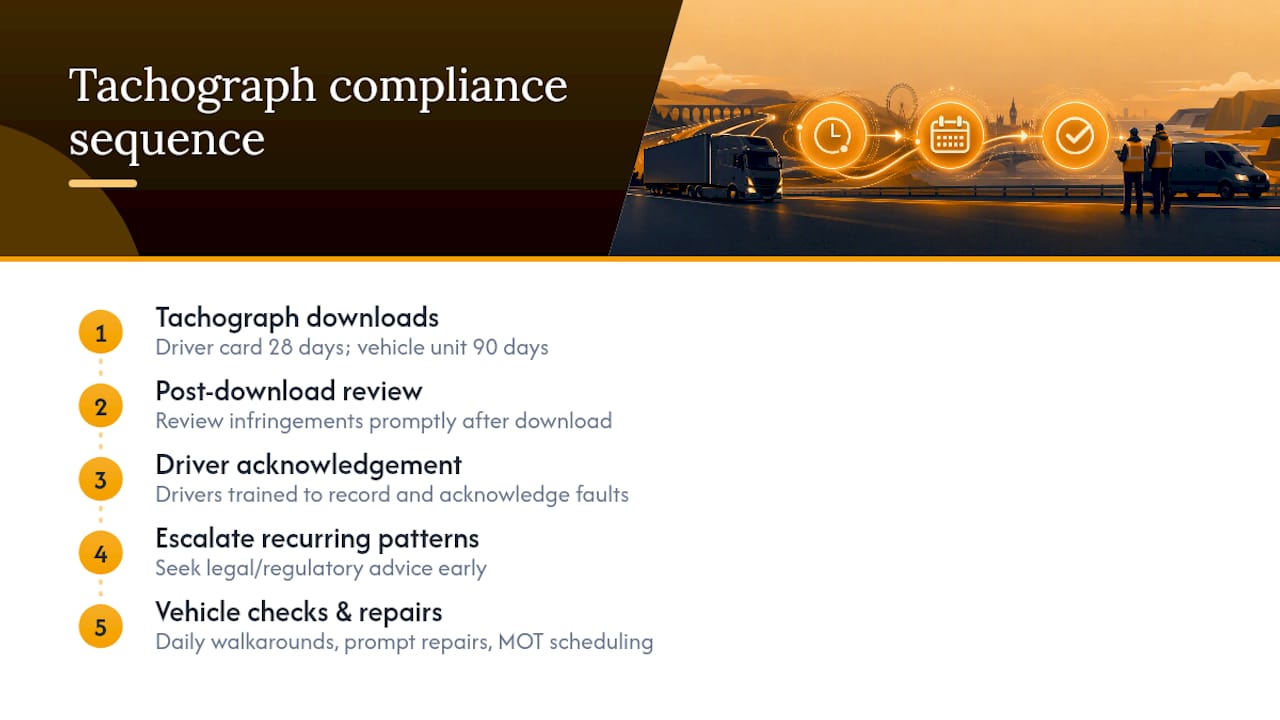
Vehicle-side, the basics still carry the most weight. Daily walkaround checks, prompt repair of defects rather than deferred ones, and disciplined MOT and annual test scheduling all feed directly into your OCRS. A vehicle that fails its annual test, or gets a roadside prohibition for a defect that should have been caught that morning, adds points you then have to work off over a rolling three-year window.
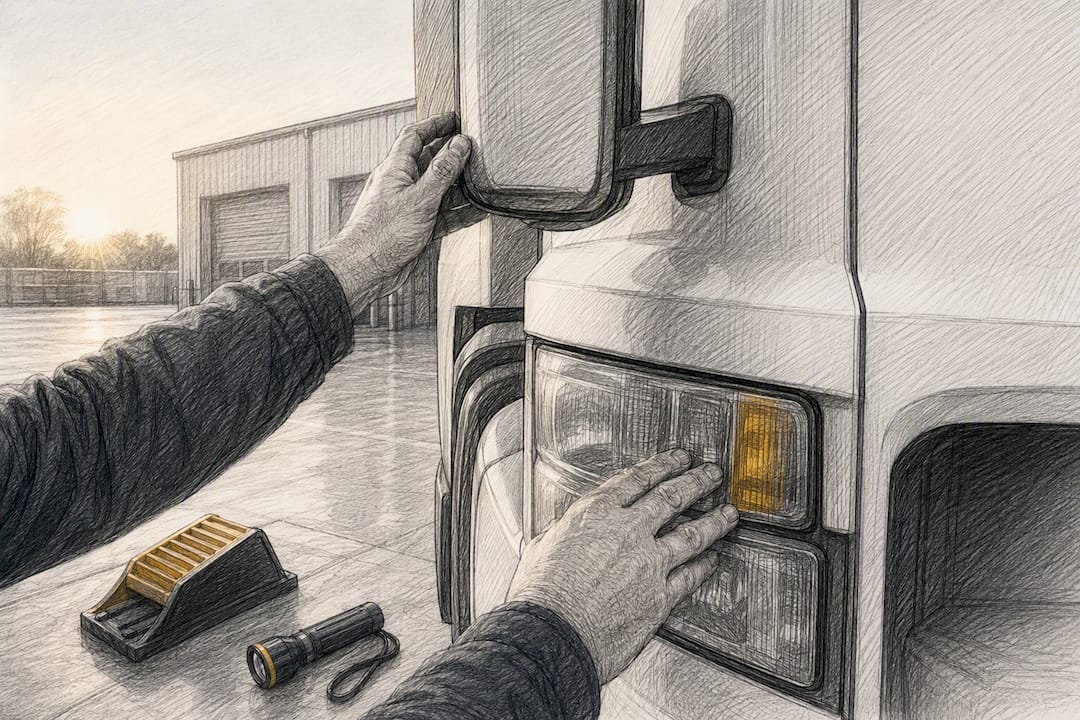
None of this works without your drivers. Training on how infringements get flagged, what a proper walkaround report looks like, and when to escalate a recurring problem rather than let it repeat matters as much as the systems you buy. One recurring theme in operator enforcement cases is a pattern of driver hours infringements that nobody investigated early, which then snowballed into something DVSA noticed before the operator did, as TransportOperator’s coverage of O-licence failures sets out. Get legal or regulatory advice early if you spot a pattern forming. Waiting until it is three months of the same infringement is waiting too long.
Your 30, 90 and 180-day action plan
You do not need to fix everything at once, but you do need a sequence. Here is one that matches how DVSA actually assesses risk.
- Days 1 to 30: Pull your current OCRS via VOL and note where the points are coming from. Audit every tachograph download date against the 28/90-day rule. Clear any outstanding MOT failures. Digitise the records you would struggle to produce on the spot.
- Days 30 to 90: Set up automated tachograph download reminders and licence/CPC expiry alerts so nothing depends on memory. Run a short training session with drivers covering infringement handling and proper walkaround reporting. Write down your maintenance and inspection schedule formally, not just as a habit in someone’s head.
- Days 90 to 180: Start building your Earned Recognition evidence base if you are not yet accredited, covering the performance metrics DVSA expects. Set up basic KPI reporting on OCRS trend, download compliance and defect rectification times. Run an internal mock desk-based assessment before DVSA runs a real one.
Pro Tip: Treat the mock desk-based assessment as a genuine dry run, not a formality. Ask a colleague outside your usual team to request the same documents an examiner would, cold, and time how long it takes you to produce a complete set.
Monitoring OCRS and Earned Recognition day to day
Checking your OCRS once a quarter is not monitoring. It is closer to hoping. Because the score recalculates daily and pulls from MOT results, roadside stops, fleet assessments and desk checks, a single bad week can shift it before you notice.
Practical monitoring looks like this:
- Log into VOL regularly, not just when a renewal is due, and note which category of event moved your score
- Track the specific performance metrics Earned Recognition requires, since accredited status now carries real procurement weight with some buyers
- Keep your reporting IT-ready, since ER assessments increasingly expect structured, exportable data rather than a folder of PDFs
This is where the manual approach starts to strain. Automated tachograph downloads that pull data on schedule rather than when someone remembers, timestamped and e-signed walkaround checks completed on a driver’s phone, and audit packs that export in the format DVSA or an ER assessor actually wants all remove the points of failure that trip operators up. It is the same principle DVSA’s own guidance leans on: the operators who cope best with inspection are the ones whose evidence was already organised before anyone asked for it.
Preparing for audits, prohibitions and public inquiries
DVSA’s desk-based checks and roadside stops tend to request the same core evidence: tachograph files, your maintenance and safety inspection (PMI) schedule, MOT and annual test history, driver CPC and licence checks, and current insurance records. Missing any one of these on request looks worse than the underlying issue often deserves.
If you receive a prohibition, act on it immediately rather than defensively. Fix the defect, document the remediation with dates and evidence, and keep that record close because it directly limits the OCRS damage. Where a prohibition points to a pattern rather than a one-off, or where a public inquiry becomes a real possibility, involve a regulatory adviser early. The Traffic Commissioner’s own guidance is clear that repeated or serious failures can end in licence revocation or disqualification, and early engagement consistently produces better outcomes than a defensive scramble after the fact.
Why compliance deserves a seat at board level
Compliance software is usually filed under admin. That is the wrong shelf. Digital, auditable records shrink inspection exposure and speed up remediation when something does go wrong, which is a business outcome, not a paperwork one. Multilingual driver apps matter too. A workforce that includes Polish, Romanian or Bulgarian speakers loses far less to translation friction when infringement reports and walkaround checks are e-signed in a language drivers actually read fluently. Treat OCRS trend and Earned Recognition readiness as KPIs a board reviews, not a task someone gets to eventually.
— Vytautas
OperatorCompliance: built for the way DVSA checks you now
Everything above points to the same conclusion: DVSA wants digital, timestamped, exportable evidence, and it wants it fast. OperatorCompliance was built around exactly that expectation, not retrofitted onto it.
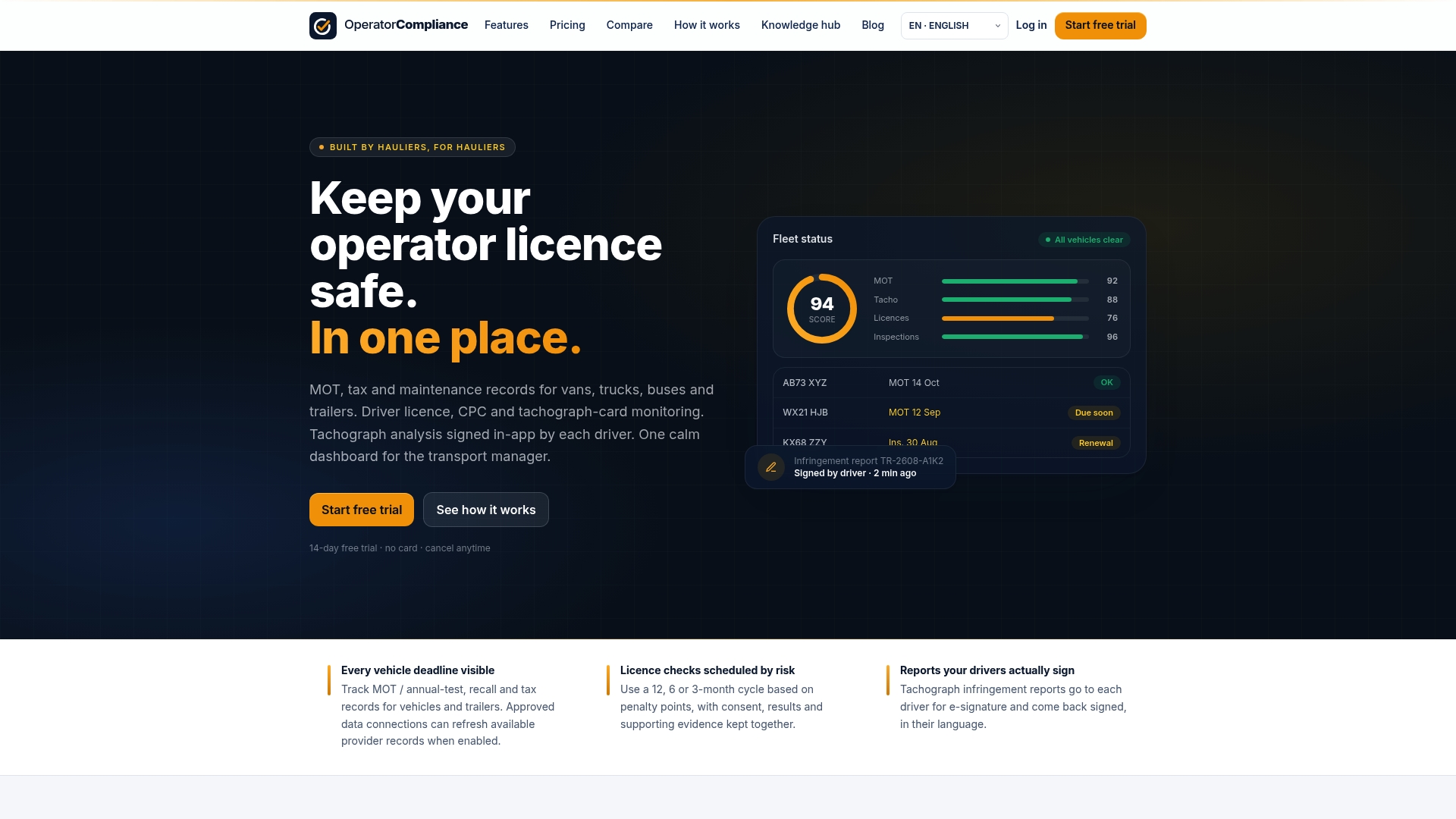
The platform automates tachograph downloads and analysis so you never miss the 28-day driver card or 90-day vehicle unit deadline, runs DVLA licence checks automatically, and gives drivers a mobile app for e-signed, multilingual walkaround checks that time-stamp every defect report. On the reporting side, it produces audit-ready compliance packs and OCRS and Earned Recognition exports built for exactly the desk-based checks and procurement questions covered above, all from one dashboard covering every vehicle and driver on your O-licence undertakings.
If you run a haulage fleet, the compliance software for hauliers page walks through the setup for your fleet size. Want to see how quickly you could be running it? See how it works and get set up in an afternoon, or start a free trial today.
Sources
FAQ
What is the biggest DVSA change for 2026?
The clearest shift is enforcement targeting: DVSA now stops more high-risk, OCRS red-rated vehicles at the roadside than low-risk ones, according to its 2025 to 2026 annual report. Alongside that, the 1 July 2026 tachograph scope change for 2.5 to 3.5 tonne international LGVs is the one most likely to catch smaller operators unprepared.
How often does OCRS actually change?
OCRS recalculates daily, drawing on MOT results, roadside inspections, fleet assessments and desk-based checks, as GOV.UK’s OCRS guidance confirms. A single event, good or bad, can move your score the same day.
Do all vans need tachographs from July 2026?
No. The new rule only applies to LGVs over 2.5 tonnes and up to 3.5 tonnes used internationally for hire or reward. Own-account vehicles and those where driving is not the main activity carry specific exemptions, detailed in GOV.UK’s policy call for evidence.
Does Earned Recognition actually reduce roadside stops?
Accredited operators typically face fewer full roadside inspections under the current DVSA earned recognition guidance, and the scheme is now used by some buyers as a pr
DVSA changes 2026