· 12 min read
One system for licence checks and tachograph records
Compare software that keeps driver licence checks and tachograph records together, so transport managers can control evidence and deadlines.
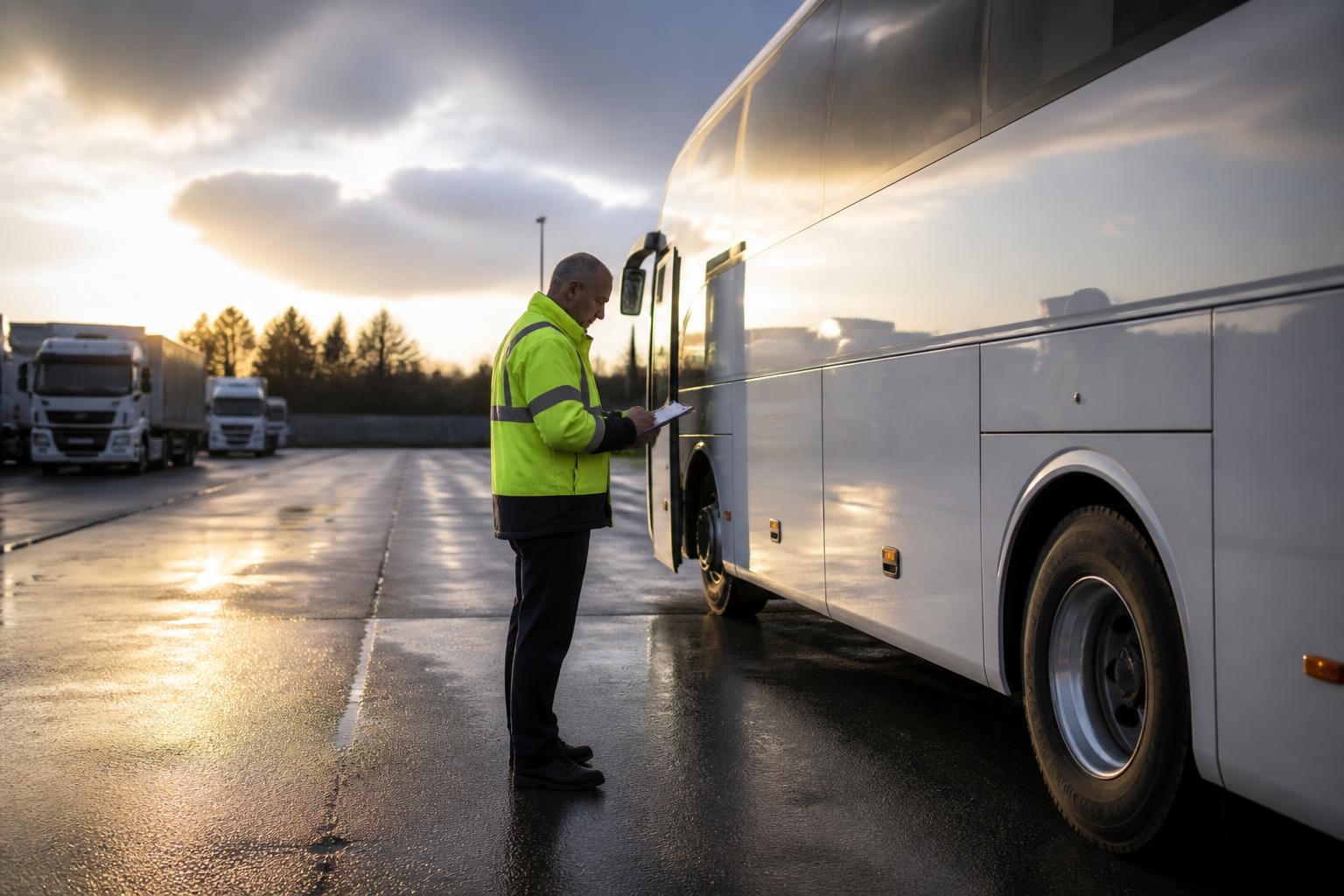
When licence checks and tachograph records sit in the same system, transport managers can see the real compliance position of a driver without jumping between portals, spreadsheets and email folders. That matters in day to day control, but it matters just as much when we need to show a clear audit trail to the DVSA or prepare records for a Traffic Commissioner hearing. One record set, one task list and one place for signed evidence reduces missed checks and makes exceptions easier to deal with.
For UK operators, this is not just about convenience. Driver licence checks, Driver CPC status, DQC expiry, tachograph downloads, infringement follow up and debrief evidence all form part of the wider operator-licence picture. If those records are disconnected, small gaps turn into bigger risks. That is why many operators now look for software that lets a transport manager track licence checks and tachograph records in one place, alongside the rest of the fleet file.
Why operators want both records in one place
The main reason is simple. The same driver is at the centre of both sets of obligations. We need to know whether that person is entitled to drive the vehicle assigned to them, whether they hold the right categories, whether there are endorsements or restrictions to review, whether Driver CPC remains current where required, and whether their tachograph activity shows infringements, missing mileage, card issues or patterns that need intervention.
If those checks live separately, the transport office ends up managing the driver twice. One process checks the licence through DVLA, records the result and sets the next review date. Another process handles card download schedules, vehicle unit downloads, analysis reports and debriefs. In practice, the action often belongs with the same people, on the same desk, in the same weekly compliance meeting.
Bringing both records together helps in several ways.
First, it supports risk based review. A driver with new endorsements, a category issue or repeated late licence responses may need closer tachograph scrutiny. Equally, a driver with repeated drivers' hours infringements may need a fresh review of competence, induction records and the dates for licence and Driver CPC checks. When the information is side by side, we can decide what needs attention without building our own picture from several systems.
Second, it improves evidence. A DVSA visit rarely looks at one narrow record type in isolation. The question is whether we are managing our operation properly. That means showing check dates, follow up actions, debrief notes, scanned documents, signatures and who completed each step. A joined up record is easier to defend than a folder structure spread across shared drives and inboxes.
Third, it reduces missed deadlines. Licence checks, DQC expiry, tachograph download intervals, debriefs, return to work reviews and document renewals all run on different cycles. Some operators work by calendar month, some by ISO week, some by payroll period. If reminders are split across tools, people assume another system is covering it. A central task list is safer.
There is also a practical point for mixed fleets. UK operators may run HGVs under an operator licence, vans used for courier work, and passenger vehicles with separate driver qualification requirements. The legal framework is not identical in every case, and where UK rules differ from the wider EU position, the UK operator still has to manage the UK requirement first. A system should help us apply the right check to the right driver and vehicle, rather than forcing every record into the same template.
What to compare before you choose a system
When comparing systems, the first question is how data gets in. A good compliance record is only as reliable as the capture process behind it.
For licence checks, look at whether the system records DVLA check results clearly, stores the date of the check, the person who reviewed it, the categories seen and any notes or actions raised. If you use mandate based checks or manual uploads, check how the evidence is attached to the driver file. For Driver CPC, the system should let us record expiry dates and keep copies of the DQC or related evidence where needed.
For tachograph records, check the capture routes. Can the system store driver card downloads, vehicle unit downloads, analysis outcomes, infringement reports and debrief acknowledgements? Can it handle both digital records and scanned supporting documents where a paper process still exists? If you use another analysis provider, ask whether the platform accepts imports, has a REST API, or supports webhooks for task creation and status updates.
Alerts matter, but only if they are usable. Compare whether reminders can be set by driver, by depot, by role or by document type. We need alerts before a licence check falls due, before a DQC expires, before a download becomes overdue, and when an infringement has not been debriefed within the period we set internally. The useful test is whether the system helps us act before a missed date becomes a breach.
Document storage needs more thought than many operators give it. The right system should hold more than a pass or fail flag. We need copies of licence check reports, tachograph debrief forms, correspondence, training notes, return to work reviews and any management instruction linked to the event. If we cannot retrieve the signed evidence quickly, the record is incomplete in practice.
Reporting is another area where systems vary widely. The basic reports should show what is due, what is overdue and what has been completed. More useful reports show exceptions, trends and unresolved actions. For example, we may want a list of drivers with endorsements added since the last check, drivers with repeated working time issues, or drivers whose debriefs are outstanding. The point is not reporting for its own sake. It is about making the next management decision easier.
User permissions are often overlooked until something goes wrong. A transport manager may need full access. A planner may only need to see whether a driver is cleared for work. A depot supervisor may need to upload debrief notes but not amend historic licence evidence. Agencies and subcontract support staff may need restricted views. Check whether permissions can be limited by user role, depot or record type.
Signed evidence is one of the biggest practical differences between systems. A report saying a debrief was done is weaker than a record showing the date, the issues discussed, the manager involved and the driver's acknowledgement. The same applies to policy issue, training attendance and follow up actions. If the system can capture signatures or equivalent acknowledgements and keep them attached to the event, the audit trail is stronger.
We also recommend checking whether the system supports wider operator records. Tachograph and licence checks do not sit alone. They connect to operator licence maintenance records, vehicle inspections, defect reporting, MOT and annual-test planning, and VOR control. If the platform only solves one narrow task, you may still end up rebuilding the full picture elsewhere.
Where separate systems usually cause problems
The most common problem is duplicate administration. One team member checks the licence and updates a spreadsheet. Another downloads tachograph data and emails an analysis report. A third stores debrief forms in a shared folder. Nothing is technically missing, but no one can see the whole position quickly.
The next problem is inconsistent dates. We often see a licence check completed on time, but the next due date not updated in the same place as the driver's tachograph review notes. Or a tachograph infringement is debriefed, but the related training action never makes it onto the driver record. Separate systems make it easier for each task to be completed in isolation and easier for the follow up to be missed.
Email chains create another weakness. If evidence sits in inboxes, it is not under control. Staff leave. Mailboxes are deleted. Attachments are saved with unclear names. During a DVSA investigation or Traffic Commissioner preparation, time is then spent proving that the action happened rather than managing the issue itself.
Spreadsheets bring their own risks. They are useful for one off analysis, but they are poor as a live compliance system. Formulas get altered. Filters hide rows. Copies are taken and worked on offline. There is rarely a strong record of who changed what and when. For operator-licence work, that is a fragile foundation.
Separate systems also weaken escalation. Suppose a driver receives points that affect our internal risk rating, or tachograph analysis shows repeated rest issues. In a disconnected process, the person seeing the issue may not control the next action. The result is a note in one system and silence in another. A combined workflow lets us raise the task, assign it, evidence it and close it in one place.
There is a wider governance issue too. A transport manager has statutory responsibilities. We cover those in more detail in our guide to transport manager responsibilities. In practice, that means being able to show continuous and effective control. Fragmented records make that harder, especially where multiple depots, agency drivers or mixed vehicle classes are involved.
Which fleet types benefit most from an all-in-one approach?
Hauliers usually benefit first because the volume of moving parts is high. HGV drivers, trailers, safety inspections, MOT bookings, annual-test planning, tachograph downloads and debriefs all run on overlapping cycles. Once the fleet grows beyond a handful of vehicles, it becomes difficult to keep clean evidence if driver records are split between different tools.
Van fleets and courier operators often think they need less structure, but they still gain from joined up records. Even where tachograph use is limited to part of the fleet or certain routes, the same business may still need driver licence checks, right to work records, walkaround checks and maintenance evidence. For fast moving operations with many starters and leavers, one system reduces the chance of drivers slipping through gaps. Our article on driver licence checks for operators covers the control points in more detail.
Bus and coach operators have a strong case for an all in one approach because driver qualification, scheduling and public safety expectations are closely scrutinised. Licence category, Driver CPC, DQC validity and tachograph compliance all need clear oversight. Passenger operations also tend to require consistent depot level control, so role based access and standardised evidence become especially important.
Owner-drivers need something slightly different. They may not need layers of permissions or a large reporting suite, but they still need one reliable record of what was checked, when it was checked and what action followed. For a small operator, the risk is often not lack of intent but lack of time. A single system helps keep the basics visible.
Agencies and recruitment businesses benefit where they supply drivers into regulated operations. They need to know which checks they complete, which checks the end operator completes, and how evidence is shared. A platform that stores licence checks, qualification records and tachograph related actions against the individual driver helps prevent disputes about who was told what and when.
Mixed fleets may benefit most of all. Where one business runs HGVs, vans and passenger vehicles, separate systems usually reflect separate departments rather than good control. A joined up platform lets us apply the right rule set to each vehicle and driver type while still keeping one management view.
How Operator Compliance fits this type of requirement
At Operator Compliance, we approach this as an operator-licence control problem, not just a document storage problem. The reason is straightforward. A transport manager does not need another place to park files. They need a working record of what is due, what has been done, what evidence exists and what still needs action.
Our system is built to hold driver, vehicle and trailer records together so the compliance picture is easier to manage. That includes key operator records such as inspections, MOT and annual-test dates, VOR status, document expiries and driver related checks. For operators who want one place to manage licence checks and tachograph evidence alongside the wider fleet file, that joined up structure matters.
For driver records, we support the practical need to log checks, keep supporting documents and track due dates. For tachograph management, the focus is on retaining the evidence that sits behind analysis and follow up, not just the fact that a report existed. That means keeping debrief records, notes and related actions attached to the right driver file, so the office can show what happened after an issue was identified. Our guidance on tachograph infringements and driver debriefs explains why that evidence matters.
We also recognise that compliance does not stop at one record type. Operators may need to connect driver checks with walkaround defect reporting, maintenance records, insurance verification and external data sources. That is why integrations and data exchange matter. Depending on the workflow, businesses may look at REST API access, webhooks and links with related services. In the wider fleet admin world that can include askMID checks against the Motor Insurers' Bureau, or MIB references, and operational links with systems such as Fleetalyse or Logivo.AI. The important point is not the name of the integration. It is whether information moves cleanly enough to keep the compliance record current and defensible.
Operator Compliance is built by Fleeta Limited, and that matters to the way we structure the product. We build around the record keeping and control expectations operators deal with in real life, including the framework set out in the DVSA Guide to Maintaining Roadworthiness. That does not remove the need for management judgement, local procedures or proper review. What it does is give us a practical way to keep deadlines, documents, tasks and signed evidence together.
For transport managers, the value is clarity. We can see which drivers are due a check, which records are complete, which actions remain open and which evidence is ready if the DVSA or a Traffic Commissioner asks for it. For operators, the value is control. Instead of relying on a patchwork of spreadsheets, inboxes and separate logins, we keep the driver compliance record in one working system, where it belongs.
If you are reviewing software for a transport manager to track driver licence checks and tachograph records in one place, compare systems on the detail that affects daily control. Look at how checks are captured, how tasks are raised, how evidence is signed, how reports are produced and how easily the whole file can be retrieved. That is the difference between a system that stores information and one that genuinely helps us run a compliant operation.
Can one system replace separate licence-check and tachograph tools?
Often yes, if it covers the checks you actually run, stores evidence properly and gives clear actions to the right people. The main test is whether it reduces duplicate entry and closes gaps in the Traffic Commissioner file.
What evidence should transport managers expect to keep?
At minimum, expect dated driver licence checks, Driver CPC or DQC records where relevant, tachograph reports, follow-up actions, sign-off and a clear history of who reviewed what and when.
Is this only useful for large HGV fleets?
No. Smaller operators often benefit most because admin sits with one or two people. A single system can reduce missed dates, scattered files and the need to check several places before an audit.
Do van fleets need tachograph records in the same system?
Not every van fleet has the same tachograph exposure, but fleets that do need tachograph oversight usually benefit from keeping it alongside driver and vehicle compliance records rather than in a separate process.
What should I ask in a software demo?
Ask how driver licence checks are recorded, how tachograph exceptions are assigned and closed, what evidence is stored, how alerts work, what reports are available and how the system supports DVSA-facing record keeping.