· 8 min read
Audit ready vehicle recall compliance for UK operators
Step-by-step playbook for UK operators to check recalls by VIN or reg, log bookings and dealer completion notes, book free repairs and build an...
Audit ready vehicle recall compliance for UK operators
Use the official DVSA recall check now, by registration or VIN, for every vehicle on your licence. If a safety recall applies, follow the manufacturer’s instructions exactly, and do not drive the vehicle if told not to. Record the recall reference, booking date and dealer completion note straightaway; manufacturers cover safety repairs at no cost to you, but the paper trail is yours to keep for O-licence audits.
TL;DR:
- Running a VIN check before purchase or sale using official tools ensures the identification of current safety recalls, which a registration lookup might miss due to keeper changes.
- Fleets with over 100 vehicles should utilize bulk look-up services to efficiently monitor recalls across the entire fleet, reducing the risk of missed alerts.
- Operators are legally responsible for acting on safety recalls promptly, and unresolved recalls can lead to DVSA enforcement actions or license reviews.
- Establishing a uniform process for logging, booking, and documenting recall repairs, along with central record storage, is vital for audit compliance and quick verification.
- Regular, scheduled bulk recall checks and pre-sale VIN verifications prevent the common mistake of overlooking open recalls, especially on used vehicles.
Table of Contents
- How do you check a vehicle for an open safety recall?
- What are your legal duties as an operator or trader?
- What should fleets do once a recall is identified?
- How do you prove recall compliance during an audit?
- Where do most fleets actually go wrong?
- How OperatorCompliance keeps recall checks from slipping through the cracks
- Sources
- FAQ
How do you check a vehicle for an open safety recall?
Go to Check-vehicle-recalls and enter either the registration number or the VIN. Both will surface open safety recalls, but the VIN is definitive: it identifies the exact build specification, whereas a registration lookup relies on DVLA keeper records staying current. For a one-off check on a single van or coach, registration is usually fine. For anything you are about to buy, sell, or add to your operating licence, run the VIN.
Vehicle recall notifications don’t always reach the current keeper. Manufacturers send letters using DVLA data, but keeper changes mean notices are often missed, which is precisely why relying on the post is a weak strategy for any fleet.
MOT history is worth cross-checking too. Vehicle recall alerts can show up as advisory flags there, giving you a second confirmation point before a vehicle goes back on the road.
For fleets running more than a hundred vehicles, checking one VIN at a time is impractical. The SMMT bulk look-up service covers roughly 98% of the UK vehicle parc and can process very large lists, with results typically returned within an hour.
- Enter registration or VIN on the GOV.UK tool for single checks.
- Use VIN specifically before purchase, sale, or O-licence addition.
- Run SMMT bulk lookups for fleets above roughly 100 vehicles.
- Cross-reference MOT history for a second confirmation.
Pro Tip: Schedule bulk recall lookups monthly rather than reacting only when a letter arrives. Recalls get added to the register continuously, and a vehicle clean last quarter can have an open campaign today.
What are your legal duties as an operator or trader?
Holding an O-licence means you’re responsible for keeping every vehicle roadworthy, and that duty extends squarely to acting on safety recalls without delay. The DVSA code of practice on vehicle safety defects and recalls sets out how manufacturers and regulators manage recall campaigns, including expectations around completion rates. Traffic commissioners treat unresolved recalls as evidence of poor maintenance systems, and that can feed directly into O-licence reviews.
Motor traders carry a specific exposure here. Selling a vehicle with a known open safety recall is not a grey area DVSA overlooks. The regulator has enforcement powers where businesses sell vehicles with outstanding safety defects, and consequences can escalate to fines and, in serious cases, prosecution.
Not every manufacturer bulletin carries the same weight. DVSA draws a firm line:
- Safety recalls address defects that could cause injury; these are legally urgent, and driving instructions must be followed.
- Service campaigns cover non-safety updates, such as software tweaks or warranty extensions; these are routine maintenance items, not compliance emergencies.
Knowing which category a notice falls into determines whether it needs handling today or can be scheduled alongside your next service.
What should fleets do once a recall is identified?
Turn this into a fixed internal procedure and every vehicle moves through it the same way, regardless of which manager spots the notice.
- Log the recall reference number against the affected VIN or registration the moment you find it.
- Check the notice for a “do not drive” instruction and ground the vehicle immediately if one applies.
- Contact an authorised franchised dealer for that manufacturer and book the repair, which is free for genuine safety recalls.
- Collect a dealer completion note (PDF or photo) confirming the work was carried out.
- Update the vehicle’s compliance record with booking date, completion date, and the note itself.
- Notify your insurer and any relevant internal team, particularly if the vehicle was off the road.
- Store the evidence centrally, not in an individual manager’s inbox or a paper folder.
Pro Tip: Batch recall repairs with scheduled safety inspections wherever the dealer network allows it. You avoid a second day off the road, and it keeps your PMI calendar undisturbed.
How do you prove recall compliance during an audit?
DVSA inspectors and traffic commissioners want to see a specific evidence trail, not a verbal assurance that “it’s sorted.” An audit-ready record needs the recall reference, VIN, the date it was identified, who checked it, the booking reference, the dealer completion note, and where that evidence is stored. Trade guidance backs this format explicitly, noting that documented completion evidence and centralised records materially reduce the risk of DVSA action during inspections.
Scheduled, automated lookups beat ad hoc checking for one simple reason: they don’t depend on someone remembering to look. A vehicle bought in March and never checked again is exactly the kind of gap an audit exposes.
A practical evidence pack for each vehicle should hold:
- Recall reference and VIN
- Date checked and who authorised the check
- Booking date and dealer completion note
- Retention for at least the duration of the vehicle’s time on your licence, plus a buffer for historic audits
Centralising these records, rather than scattering them across email threads and paper files, is what turns a compliance obligation into something you can produce in minutes when an examiner asks.
Where do most fleets actually go wrong?
Keeper changes are the biggest blind spot. A vehicle acquired second-hand often carries an open recall the previous owner never actioned, and the manufacturer’s letter went to an address that’s no longer relevant. Schedule a recall check as a fixed step in every vehicle acquisition, not an optional extra.
Used vehicle intake and pre-sale checks deserve the same discipline. A trader who runs a VIN check before every sale closes off the single biggest legal exposure in this whole area. And where a repair is needed, folding it into an already-booked maintenance visit avoids a second day of downtime.
— Vytautas
How OperatorCompliance keeps recall checks from slipping through the cracks
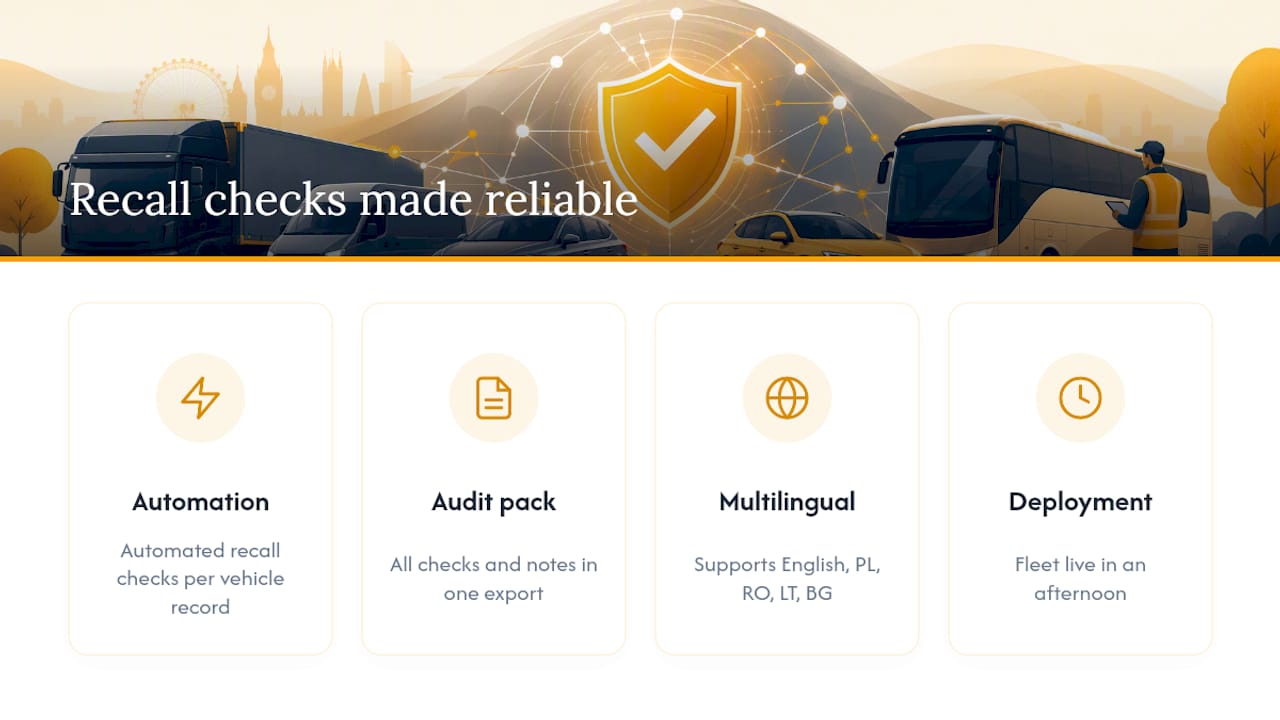
An alternative to inbox-and-spreadsheet tracking exists, and it removes the single failure point that catches most operators out: someone forgetting to check. Operatorcompliance runs automated recall checks tied directly to each vehicle record on your licence, so a status change doesn’t wait for a manager to remember a task.
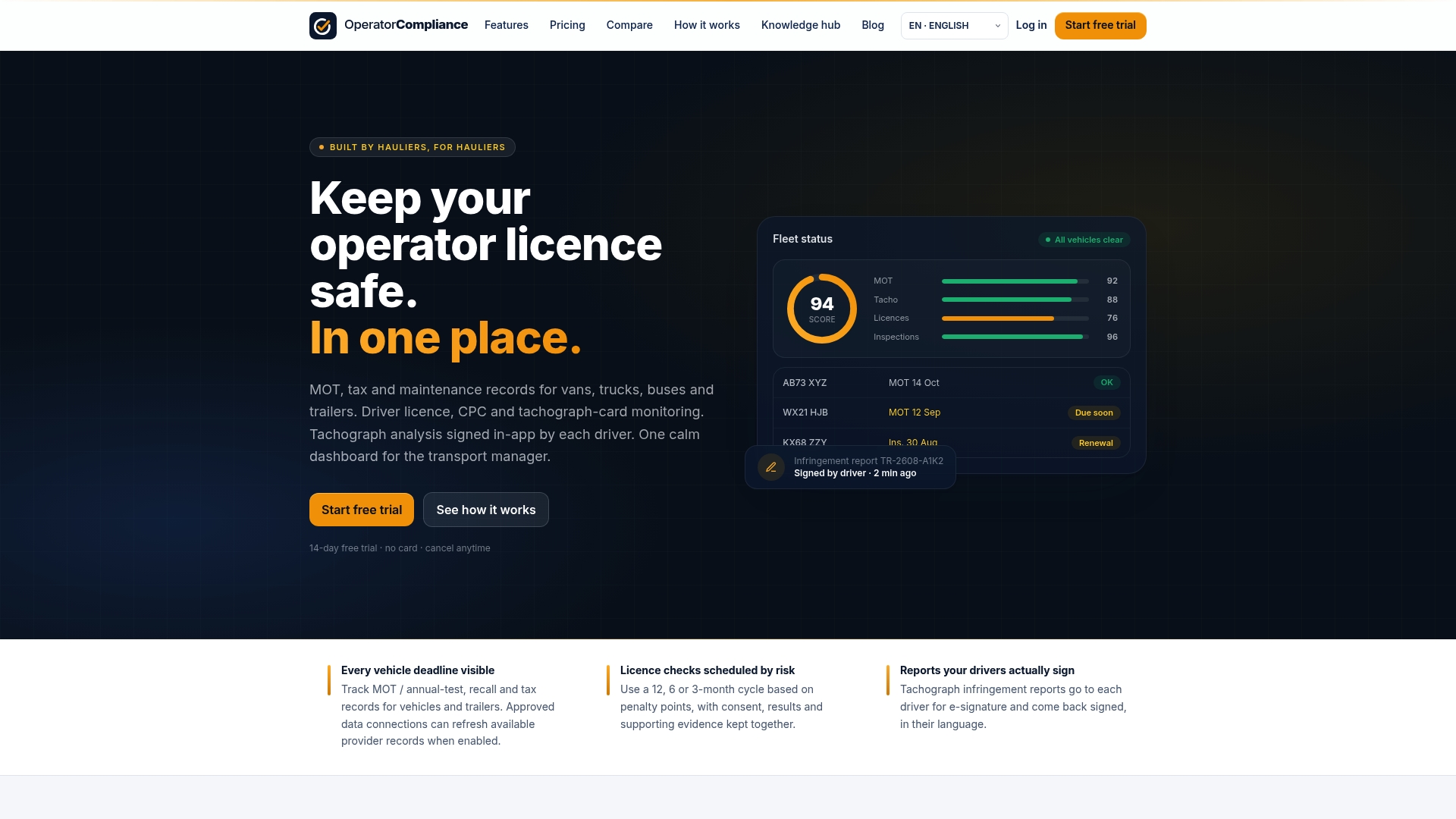
Every check, booking reference and dealer completion note lands in one central document store, ready to export as an audit-ready pack the moment a DVSA examiner or traffic commissioner asks for evidence. The platform also runs in English, Polish, Romanian, Lithuanian and Bulgarian, so drivers can confirm walkaround checks and sign off infringement reports in their own language, alongside scheduled reminders that flag recall status before it becomes a roadside problem.
Plans start at a monthly fee with several tiers available; see the pricing page for current details. Hauliers running larger fleets can see how the platform scales on the compliance software for hauliers page, and if you want to see how quickly it goes live, the setup guide walks through getting a fleet running in an afternoon.
Sources
For anything beyond this guide, go straight to primary sources rather than secondhand summaries.
FAQ
What are your rights if your vehicle is recalled?
You’re entitled to a free repair or replacement part from the manufacturer once a safety recall is confirmed. If the notice includes a “do not drive” instruction, you should follow it and arrange transport to an authorised dealer rather than continuing to use the vehicle.
How long does a vehicle recall stay open?
A recall stays open until the affected vehicle has the repair completed and a dealer confirms rectification; there’s no fixed expiry date attached to the notice itself. That’s why checking status regularly matters more than checking once and assuming it’s resolved.
How do you check if a vehicle has a recall in the UK?
Enter the registration number or VIN into the GOV.UK recall check tool, which shows any open safety recalls against that vehicle. Fleets managing many vehicles can use the SMMT bulk look-up service, which covers around 98% of the UK parc, or automate the process with software such as Operatorcompliance.
Is it legal to sell a car with an open recall in the UK?
Selling a vehicle with a known open safety recall exposes a trader to DVSA enforcement action, which can include fines and, in serious cases, prosecution. The safer, and simpler, standard is to run a VIN check before every sale and resolve any open recall first.
Recommended
- Taxi and private hire fleet compliance
- PSV operator compliance software
- Compliance software for hauliers
- Features - vehicle, driver and tachograph compliance
This article is general guidance for UK operators and transport managers, not legal or professional advice. Regulations change, so always confirm the current requirements with GOV.UK, DVSA and your traffic commissioner before acting.
vehicle recall compliance