· 12 min read
What happens when an axle is overloaded
A practical guide to what can result from overloading an axle, including safety risks, DVSA action, vehicle damage and operator-licence impact.
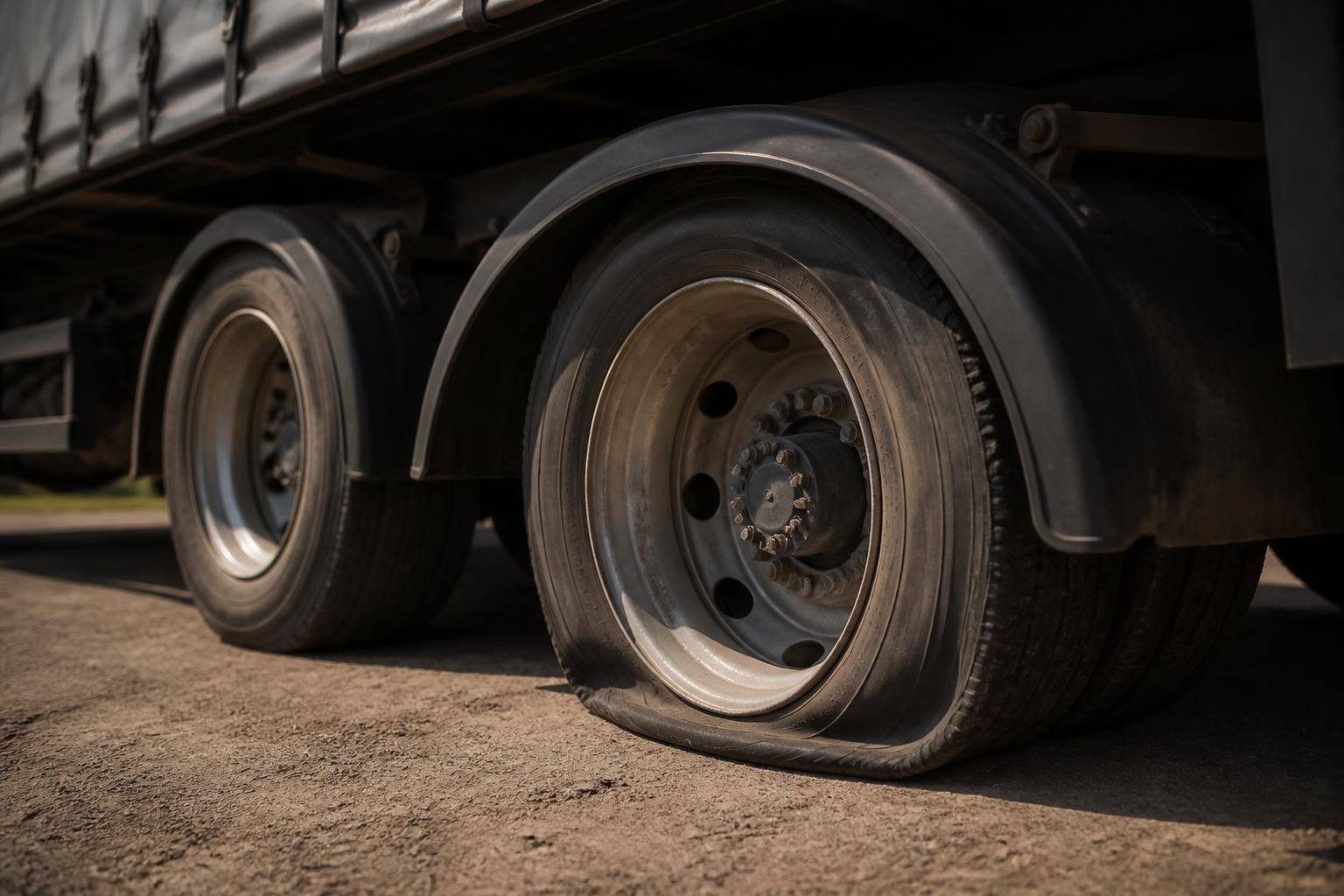
An axle can be overloaded even when the vehicle’s total weight is legal. When that happens, the risks are not theoretical. Braking balance changes, steering can become light or vague, tyres and suspension are put under abnormal stress, and the vehicle can be stopped at the roadside until the load is corrected.
In practice, what can result from overloading an axle is a mix of safety risk, delay, cost and compliance trouble. For operators, the important point is simple, gross weight is only one limit. Each axle and axle group has its own plated limit, and that has to be controlled just as carefully as the vehicle’s overall maximum weight.
Why axle overload matters even below gross weight
A common mistake is to think that if the vehicle is under its gross vehicle weight, or GVW, everything is fine. It is not. UK goods vehicles have plated limits for gross weight and for each axle, or axle group. Both matter. A vehicle can be under its gross limit but still be illegal because too much of the load is concentrated over one axle.
That happens more often than many operators expect. The cause is usually not that the load is too heavy overall, but that it has been positioned badly. A pallet placed too far forward can overload the steer axle. Freight loaded too far back can overload the drive axle or rear axle group. On drawbar combinations and articulated vehicles, coupling position, trailer loading pattern and load movement all affect how weight is shared.
This is why axle weights have to be managed separately from gross weight. A bridge plate or weighbridge ticket showing the total vehicle weight is useful, but it does not on its own prove that each axle is legal. To know that, you need axle readings or a loading method that reliably controls axle distribution.
For UK operators, this is a day to day compliance issue, not a technicality. DVSA enforcement is based on plated limits. If one axle exceeds its permitted weight, the fact that the vehicle is under gross weight does not cancel the offence. The vehicle can still be prohibited and the operator can still face follow up action.
The same principle applies across the wider road transport sector. Vans, rigid HGVs, artics, buses and coaches all depend on proper weight distribution. The exact rules and tolerances can differ by vehicle type and use, but the operational lesson is the same. Do not treat total weight as the whole picture.
What can result from overloading an axle?
If you ask what can result from overloading an axle, the answer starts with immediate safety risk and ends with operator-licence exposure.
The first outcome is that the vehicle may not handle as intended. Overloading one axle changes the way the weight is carried across the chassis. That affects braking effort, steering response, tyre loading and general stability. The driver may notice it straight away, or only when braking hard, cornering, descending hills or reacting to an emergency.
The second outcome is roadside disruption. If DVSA or the police detect an overloaded axle, the vehicle can be directed off the road for checks. If the overload is confirmed, the vehicle may be prohibited from moving until the weight is redistributed or removed. That means missed delivery slots, failed collections, delayed routes and pressure on traffic office staff to recover the situation.
The third outcome is financial cost. That can include fixed penalties, time lost, reloading charges, additional vehicle movements, wasted driver hours and customer service consequences. If freight has to be transhipped or partially offloaded, the direct cost can quickly exceed the value of the original journey margin.
The fourth outcome is compliance risk. A single incident may be treated as a one off, depending on the facts. Repeated axle overloads point to weak systems, poor loading control and a failure to manage transport operations properly. That is where the issue moves beyond a roadside event and into the operator’s record.
For operators with an O-licence, repeated overloading can attract attention from the Traffic Commissioner. It suggests that the business may not be exercising effective and continuous control over loading, driver instruction, route planning and vehicle use. That is why axle overload should be treated as part of operator-licence compliance, not just load security or warehouse practice.
If you want a broader look at the legal side of loading, our guide to overloading and axle-weight rules in practice sets out the issue in more detail.
The safety and vehicle risks of too much weight on one axle
Too much weight on one axle changes how the vehicle behaves, and not always in a way the driver can correct.
On the steer axle, overload can make steering heavy and increase tyre scrub, especially at low speed and on turns. It also places more stress on steering components and front suspension. If the front axle is overloaded because the load is too far forward, the rear axle may still be legal, but the vehicle can become harder to control and more vulnerable to tyre or suspension problems.
If the rear axle or drive axle is overloaded, different issues appear. The load on the rear suspension, wheel bearings and tyres rises sharply. Tyres run hotter under excess load. That increases wear and raises the risk of failure. Bearings, hubs and suspension components are also exposed to loads beyond what they were designed to carry over normal operating cycles.
Braking is affected because axle loads influence how braking forces are distributed. Too much weight on one axle can overload tyres during braking and reduce the margin before loss of grip. At the same time, if weight has shifted away from another axle, that axle may contribute less effectively to braking and road holding. The result can be longer stopping distances or less stable braking, particularly in wet conditions.
Load stability is another issue. A vehicle with poor axle distribution can feel unsettled in bends, on roundabouts and during lane changes. On tankers, tippers and mixed-load vehicles, the effect can be worse because the centre of gravity may already be less predictable. Even on a curtainsider or box van, an unevenly positioned load can alter handling enough to make the vehicle feel different from what the driver expected at dispatch.
Road surfaces and speed matter too. A vehicle that seems manageable on a short, flat urban run may behave very differently on a motorway, on poor road surfaces or on a downhill section where braking effort rises. Axle overload is not just a static weighing problem. It is a dynamic operating risk.
For buses and coaches, passenger distribution and luggage loading can also affect axle weights. In that sector, the same principle applies, although the loading pattern is different from freight. Operators still need to understand how the vehicle’s plated axle limits relate to real world loading.
This links closely with routine roadworthiness control. A vehicle repeatedly running near or over axle limits will tend to show wear faster in tyres, suspension and related items. Our article on what a safety inspection covers on a compliant fleet explains where those issues are often picked up.
What DVSA can do if an overloaded axle is found
When DVSA finds an overloaded axle, the response is usually practical first and enforcement second. The immediate concern is to stop an unsafe or unlawful journey from continuing.
At the roadside, the vehicle may be directed to a check site or weighbridge. DVSA can assess axle weights and gross weight against the vehicle’s plated limits. If an axle is overloaded, the vehicle may be issued with a prohibition. In many cases that means it cannot continue until the load has been redistributed, reduced or transferred to another vehicle.
That can be straightforward if the load can be repositioned safely on site. Often it is not. Palletised freight may need a second vehicle. Loose loads may need specialist handling. Passenger vehicles present different operational issues again. Whatever the vehicle type, the operator is left dealing with delay, customer impact and the cost of putting it right.
The prohibition itself matters. A prohibition, commonly referred to as a PG9, becomes part of the operator’s compliance picture. It may trigger internal investigation, requests for records, or questions about loading procedures and driver instructions. If the circumstances suggest a wider management failing, DVSA may look beyond the single incident.
Follow up action can include checking whether the operator has proper systems for loading control, whether drivers are trained to recognise axle weight risk, and whether dispatch staff understand plated limits. If the issue appears systemic, it can feed into a maintenance investigation or an operator-licence case.
The exact enforcement route depends on the facts, including the degree of overload, vehicle type, operator history and whether the problem was corrected promptly. But operators should assume that an axle overload is not dismissed simply because the total vehicle weight was legal.
For more on the compliance impact of prohibitions, see our guide to what a PG9 means for your vehicle and licence risk.
How axle overload affects operator-licence compliance
Axle overload is not only a driver issue. It is often evidence of a systems issue.
A compliant operator should be able to show how loads are planned, how vehicles are selected, how drivers are instructed, and how exceptions are dealt with. If axle overloads keep happening, that suggests those controls are either missing or not working. The Traffic Commissioner will be interested in that, because operator licensing is based on effective and continuous management.
Repeated overloads can indicate several weaknesses at once. The wrong vehicle may be allocated for the job. Warehouse staff may not understand axle distribution. Drivers may be sent out without axle weight information or authority to refuse an unsafe load. Managers may not review incidents properly. Records may be too weak to show what happened and what changed afterwards.
This is where documentation matters. If DVSA asks what controls you have, you need more than verbal assurances. You need loading instructions, defect and inspection records, driver briefings, disciplinary or retraining notes where relevant, and evidence that incidents are reviewed and closed out. If the matter reaches a public inquiry, the quality of those records matters.
For transport managers, axle overload should sit alongside MOT, annual-test, PMI scheduling, tachograph management, driver licence checks, Driver CPC and DQC control as part of the same compliance system. It is another area where the question is not only whether a rule was broken, but whether the operator had proper management in place to prevent it.
That is one reason we built Operator Compliance around the record trail operators actually need. Fleeta Limited runs trucks under an operator licence itself, so the system was shaped around the evidence expected under the DVSA Guide to Maintaining Roadworthiness, rather than around a generic fleet database. Axle loading controls are operational, but they also belong in the wider file that protects the licence.
Our article on the records that help keep an operator licence safe covers that wider evidence base.
How operators can prevent axle overload in practice
Preventing axle overload starts before the vehicle is loaded. The first control is job planning. Make sure the vehicle and trailer are suitable for the load, not just in total payload terms but in axle distribution terms. A short wheelbase rigid and a longer wheelbase rigid may both carry the same gross weight, but not the same load in the same position.
Use clear loading rules. Warehouse and yard teams need to know where weight should sit on each vehicle type. That means practical instructions, not vague reminders. Marked load positions, standard loading diagrams and simple axle-risk notes for common vehicle bodies all help.
Where the work justifies it, get axle weights checked before departure. That may mean an on site weighbridge, portable axle weighing equipment, or a nearby facility used as part of the dispatch process. A gross weight reading is useful, but axle readings are better. If you regularly carry dense freight, mixed pallet weights or machinery, axle checks should be routine rather than occasional.
Drivers need specific instruction too. They should understand plated weights, how load position affects axle loading, and when to challenge a load. They also need a route for escalation. If a driver believes a vehicle is wrongly loaded, there must be a clear process for stopping the dispatch and getting management support.
Written procedures matter. Set out who is responsible for weight information, who decides vehicle allocation, who authorises departures, and what happens if the load cannot be made legal on the planned vehicle. Keep those procedures with your transport records and review them after incidents.
Do not ignore near misses. If a vehicle is found to be close to an axle limit, treat that as useful warning data. Review the loading plan, the vehicle choice and the communication between traffic office, warehouse and driver. Small corrections made early prevent prohibitions later.
For operators running mixed fleets, keep vehicle data accurate and accessible. Drivers and planners need the right plated weights, body dimensions and trailer details. If those records are scattered across spreadsheets, paper files and memory, mistakes become more likely. In OperatorCompliance, many operators use one place to track vehicle records, inspection dates, driver evidence and compliance actions so loading issues can be managed alongside the rest of the operator-licence file.
Finally, keep evidence of what you do. If DVSA or the Traffic Commissioner ever asks how you control axle weights, you should be able to show training records, loading instructions, weighbridge tickets where used, incident reviews and corrective actions. Compliance is easier to defend when the paperwork exists before the question is asked.
Axle overload is preventable, but only if operators treat it as a controlled risk. The key point is simple. Legal gross weight does not guarantee legal axle weights, and one overloaded axle is enough to create safety, enforcement and licence trouble.
Can an axle be overloaded if the vehicle is under its gross weight?
Yes. A vehicle can be legal on total weight but still illegal if too much of that weight sits over one axle or axle group.
What is the main danger of overloading an axle?
The main danger is loss of safe control. Overloading one axle can reduce braking performance, affect steering, overload tyres and make the vehicle less stable.
Can DVSA stop a vehicle for an overloaded axle?
Yes. DVSA can take roadside action if an axle is overloaded, including preventing further movement until the weight is redistributed or removed.
Does axle overload damage tyres and suspension?
Yes. Excess weight on one axle increases stress on tyres, wheels, suspension and bearings, which can lead to faster wear or outright failure.
Why does axle overload matter for a transport manager?
Because repeated overloads can show weak control of loading, driver instruction and checks. That can become a wider operator-licence compliance issue.