· 12 min read
Where to find your driving licence issue number
Learn where to find the issue number on a UK driving licence, what it means, when operators need it, and how to avoid failed checks.
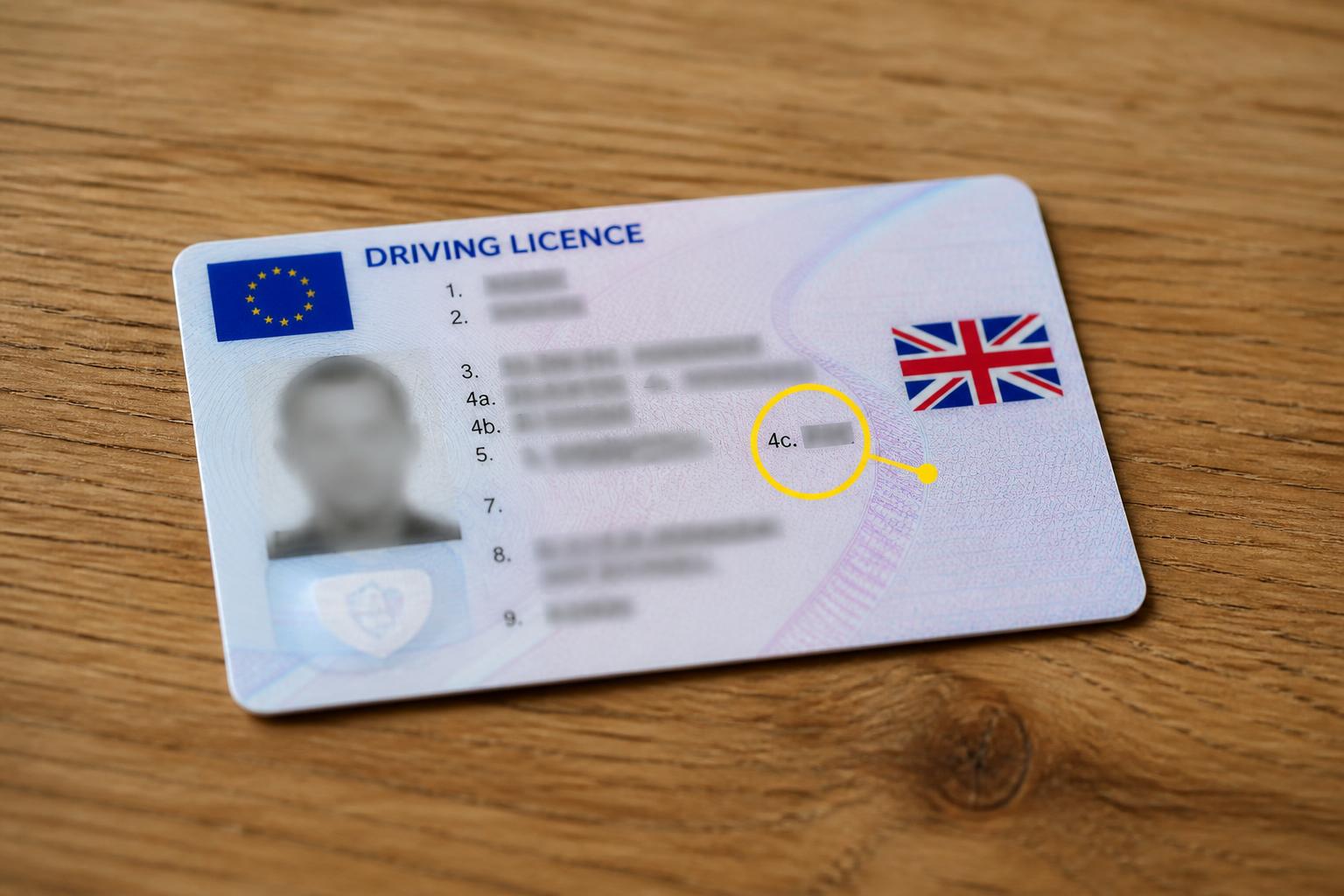
If you need the issue number on a UK driving licence, look at the front of the photocard, usually at field 5. It is a two-digit number, such as 01 or 02, and it sits separately from the much longer driver number in field 5. It tells you which version of the card the driver is holding, not what entitlement they have to drive.
For operators, agencies and transport managers, that small number matters because it helps confirm that the licence details on file match the current card. It is often collected during onboarding, periodic driver checks and audit work, especially where records need to show exactly which licence was seen and when.
What the issue number is and why operators ask for it
The issue number on a UK driving licence is the version number of the photocard licence. Each time DVLA issues a new photocard for that driver, the issue number usually moves on. In practice, it is a simple way to distinguish one card from the next.
That matters in fleet and driver administration because operators are rarely interested only in whether a person has a licence. They also need to know whether the copy on file reflects the current document. A driver may have renewed the card, changed address, replaced a lost licence or updated their name. If your records still show an older issue number, you know the card you originally checked is no longer the current one.
Transport managers and compliance teams ask for the issue number for a few practical reasons:
- to record exactly which photocard was inspected at recruitment
- to spot when a driver has been issued with a replacement card since the last check
- to match internal records to the latest document held by the driver
- to reduce confusion where several copies of a licence have been emailed over time
- to support audit trails for driver file reviews
Agencies and subcontractor managers also use it when drivers move between clients or depots. If one branch has copied a licence at issue number 03 and another branch receives a card showing issue number 04, that tells you there has been an update and the file should be refreshed.
This is an administrative control, not a legal entitlement check by itself. A transport manager still needs the proper licence verification process, whether by checking the photocard, using the DVLA online service with a check code, or reviewing authorised reports from a provider. If you need a wider process around endorsements, categories and recheck intervals, the guide to driver licence checks for operators is the more useful starting point.
For compliance purposes, the issue number is best treated as one field within a full driver record, alongside the driver number, expiry date, categories, Driver CPC dates where relevant, and evidence of the last check completed.
Where to find it on a UK photocard licence
On a current UK photocard driving licence, the issue number appears on the front of the card. You are usually looking for field 5. This field contains the driver number and, after that, the issue number.
The easiest way to identify it is this:
- the driver number is the long alphanumeric code
- the issue number is the final two digits shown after the driver number
- it is often printed slightly apart, or at least visibly separate once you know what you are looking for
A common mistake is to copy the whole line and assume it is all one identifier. It is not. The long code is the driver number. The last two digits are the issue number for that card.
So, if a licence shows a driver number followed by 01, the 01 is the issue number. If a replacement card is later issued, that may become 02. The exact layout can vary slightly depending on card design updates, but the practical point remains the same, look at the front of the photocard and identify the final two-digit issue marker in field 5.
A few points help avoid confusion:
- Do not confuse the issue number with the photocard expiry date in field 4b.
- Do not confuse it with the date the licence was first issued for a category on the reverse.
- Do not confuse it with the driver number itself, which is much longer and built from the driver’s personal details.
- Do not rely on a poor-quality photocopy where the last digits are cut off or blurred.
If a driver sends a smartphone photo, ask for a clear image of the full front of the card. Cropped images often remove the edge of field 5, which is exactly where the issue number may be hardest to read. In a recruitment setting, it is worth having a standard instruction sheet that tells applicants to photograph the whole card, front and back, in good light.
For vocational drivers, remember that the issue number is on the driving licence photocard, not on the DQC. A Driver CPC card has its own purpose and its own dates. Operators should keep those records separate, even if both are checked at the same time.
What the issue number does and does not tell you
The issue number tells you which version of the photocard is currently in the driver’s hand. That is useful, but it is limited.
What it does tell you:
- that the card is a later or earlier version than the one you may already have on file
- that DVLA has reissued the photocard at least once if the number has increased
- that your stored copy may need updating if the driver presents a newer issue number
What it does not tell you:
- when the driver first gained entitlement to a category
- whether the driver currently holds C, C+E, D or D+E entitlement
- whether there are endorsements, disqualifications or restrictions
- whether a vocational entitlement has expired or been surrendered
- whether Driver CPC is current
- whether the driver holds a valid DQC
- whether the driver meets any operator-specific insurance condition
- whether the licence has been checked against DVLA records recently
This distinction matters. Some businesses collect the issue number and treat that as if it proves the licence has been fully checked. It does not. A clean-looking photocard with a current issue number could still sit alongside expired vocational entitlement, missing Driver CPC, or new penalty points that your file does not yet show.
For goods vehicle and passenger vehicle operators, the issue number should never replace proper licence control procedures. It is one data point only. If you run a fleet under an operator licence, your systems need to show a broader pattern of active control over drivers, vehicles and records. That same principle runs through operator-licence maintenance records, where documentary accuracy matters because a Traffic Commissioner or DVSA examiner will look at the whole compliance picture, not one field in isolation.
There is also a UK-specific point here. In the UK, photocard administration and entitlement records are managed through DVLA processes. You should not assume that a practice described for EU licences generally will map neatly onto a Great Britain photocard check. If you operate cross-border or employ drivers with non-GB licences, build separate procedures for those documents rather than forcing them into the same field logic.
When the issue number changes
The issue number usually changes whenever DVLA issues a new photocard. In everyday fleet administration, the most common triggers are straightforward.
Common reasons include:
- routine photocard renewal
- replacement of a lost card
- replacement of a stolen card
- replacement of a damaged card
- change of name
- change of address
- renewal following expiry of the photocard document
- administrative reissue by DVLA after certain updates
For operators, the most important point is not the reason itself, but the fact that the number has changed. A change tells you the card on file may no longer be the current one. That should trigger a document refresh.
Address changes are a good example. In Great Britain, drivers are required to keep the address on the licence up to date. When a driver moves house and updates the licence, DVLA issues a replacement photocard. That often means a new issue number. If your records still show the previous issue number, that is a sign your file has not caught up with the current card, even if the driving entitlement itself has not changed.
Name changes create the same practical issue. If a driver marries, divorces or otherwise changes their legal name, the photocard may be reissued. Again, the issue number can move on without any change to categories or endorsement status.
A lost or damaged card is another common cause. The driver applies for a replacement, receives a fresh photocard, and your existing copy becomes out of date. If your business accepts emailed scans without comparing issue numbers, old files can sit unnoticed for months.
Routine renewal can also cause confusion. Drivers may assume that because they have held the same entitlements for years, nothing material has changed. From a compliance records point of view, something has changed, the document version. That is enough reason to update your copy and note the new issue number.
The useful operational rule is simple. If the issue number is different from the one on file, treat the licence image and associated record as superseded and replace them.
How to use it in driver checks without creating admin errors
The issue number is easy to collect, but it is also easy to mishandle. Most admin errors happen because businesses either record too little or record the wrong thing.
A practical process for operators and agencies looks like this.
At recruitment
When you first onboard a driver:
- obtain clear images of the front and back of the photocard
- record the driver number separately from the issue number
- record the photocard expiry date separately
- note the date the document was seen
- complete a DVLA check or equivalent authorised check as part of the onboarding process
- if the role is vocational, record Driver CPC and DQC details separately
Do not create one free-text field called “licence number” and put everything into it. That is how issue numbers get merged into driver numbers and become unusable later.
During periodic licence checks
At each scheduled recheck:
- ask the driver whether the licence has been renewed, replaced or updated since the last review
- compare the issue number on the current card with the one on file
- if the number has changed, replace the stored image and update the record
- complete the normal entitlement and endorsement check, because a matching issue number does not prove nothing else has changed
This matters for agency drivers and multi-site fleets. A depot may assume head office has the latest licence copy, while head office assumes the depot checked it locally. Recording the issue number as a standalone field helps both sides see whether they are looking at the same card version.
During compliance audits
When reviewing driver files internally:
- sample records and compare stored issue numbers against the latest licence copies
- look for duplicate files where different issue numbers appear for the same driver
- check whether a new issue number was followed by a fresh DVLA check and updated document image
- make sure old copies are retained or deleted in line with your document retention policy, rather than left active by mistake
This is where software structure matters. If your system can flag document changes, track check dates and keep signed evidence together, transport managers spend less time chasing basic discrepancies. Operator Compliance is built around operator records and deadlines, including driver documentation, vehicle files, MOT and annual-test planning, and evidence needed for the Traffic Commissioner file. If you are reviewing how licence evidence fits into the wider compliance picture, it also helps to look at operator-licence undertakings and the records behind them.
Avoid these common mistakes
Several recurring errors cause trouble in audits and day-to-day administration:
Recording the whole of field 5 as the issue number
Field 5 includes the driver number plus the issue number. If staff are not trained, they may enter the entire line into the wrong field. Use separate labels and examples in your forms.
Treating the issue number as proof of entitlement
A higher issue number does not mean the driver has gained or retained any particular category. Always check categories and restrictions separately.
Ignoring issue number changes because the name looks the same
Drivers often present a newer card with the same name and photo. Staff assume there is no difference. The issue number is often the clue that the file should be updated.
Failing to refresh supporting checks
If the card version has changed, consider whether your internal policy requires a fresh online check, especially for higher-risk roles or vocational drivers.
Using poor document images
If the front of the card is blurred, the last two digits in field 5 can be unreadable. Build image-quality checks into onboarding.
Set a standard record format
A clean record structure reduces almost all of this avoidable admin. For each driver, keep distinct fields for:
- full name
- date of birth
- driver number
- issue number
- photocard expiry date
- categories held
- date of last DVLA check
- endorsement summary
- Driver CPC or DQC expiry, where relevant
- date licence images were last updated
That way, if a driver sends a replacement photocard, the administrator can update one field confidently rather than overwriting unrelated data.
In short, the issue number on a UK driving licence is a small but useful control field. You will find it on the front of the photocard, as the final two digits in field 5. It helps operators confirm which version of the card they have seen, but it does not replace proper licence, entitlement or Driver CPC checks. Used properly, it prevents stale records and avoids the common problem of holding an out-of-date licence copy while assuming the file is current.
Is the issue number the same as the driving licence number?
No. The driving licence number is the longer driver identifier. The issue number is a separate two-digit code showing which version of the photocard has been issued.
Where is the issue number on a UK driving licence?
It is on the front of the photocard. It appears as a two-digit number, separate from the main driving licence number and other personal details.
Does the issue number change when a licence is renewed?
Usually, yes. If DVLA issues a new photocard, the issue number normally increases to reflect the newer card version.
Can I check a driver without the issue number?
Some operator processes may still proceed, but missing the issue number can cause delays, failed identity matching or inaccurate records during licence checking.
Does the issue number show when the driver passed their test?
No. It relates to the photocard issue, not the original test pass date. Test pass dates and entitlement history must be checked elsewhere on the licence record.