· 13 min read
Manual tachograph entries that stand up at a DVSA check
A practical guide to manual entries on digital tachograph records, when drivers must make them, what to include and how operators should check them.
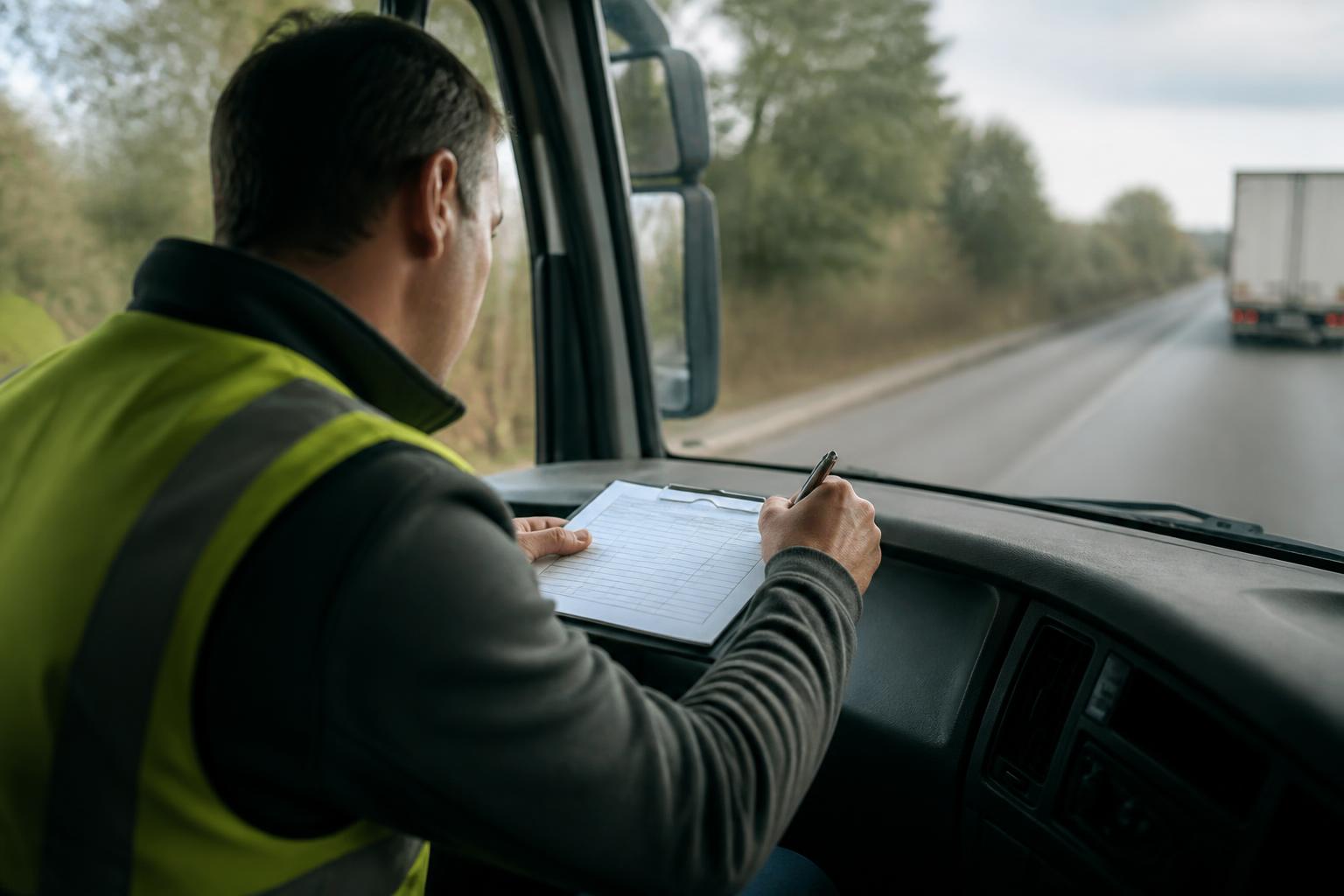
A manual entry fills the gap when a driver’s activities are not already recorded on the vehicle unit or driver card. On a digital tachograph, that usually means entering work, rest, break or availability that happened before the card was inserted, after it was removed, or while the driver was away from the vehicle. If the record is incomplete, the gap will be obvious at a roadside stop, during an operator visit, or when tachograph data is analysed back at base.
For UK operators, that matters because DVSA does not just look at driving time in isolation. It looks at whether the driver record makes sense from shift to shift and whether the operator can show proper control of drivers’ hours and working time. Good manual entries help a driver explain the day clearly. Poor or missing entries create avoidable questions, debriefs and infringements.
What manual entries are and why they matter
A manual entry on a digital tachograph is the driver’s way of adding activities that the head unit did not capture automatically. The tachograph records driving when the vehicle moves, but it cannot know what happened before the card went in, after it came out, or during periods away from the vehicle unless the driver tells it.
The practical problem this solves is a broken timeline. If a driver starts work in the yard, does vehicle checks, loads, completes paperwork, then inserts the card 45 minutes later, the card record on its own would suggest the shift began at card insertion. That is not a complete account of the day. The same applies if the driver removes the card at the end of driving but still has other work to do, or if the driver has been on rest since the previous shift and needs that rest period shown.
Complete records matter for two reasons.
First, they matter to the driver at the roadside. During a DVSA check, an examiner will want to see a coherent record for the current day and preceding days. If there are gaps, the driver may be asked to explain them. Some explanations are perfectly legitimate, but if the entry was never made, the driver is relying on memory instead of a proper record.
Second, they matter to the operator. A transport manager reviewing tachograph data needs enough information to assess compliance properly, challenge errors, and keep evidence on file for the Traffic Commissioner if needed. Missing manual entries can distort both drivers’ hours analysis and Working Time Directive records. They can also make a compliant day look non-compliant, or hide a real issue that should have been picked up earlier.
This is one reason we treat tachograph evidence as part of the wider operator-licence file, not as a separate admin task. If you are already reviewing tachograph analysis and driver activity records, manual entries should be part of that same routine.
When a driver needs to make a manual entry
Drivers usually need a manual entry whenever there is a period of duty or rest that should be on the record but was not captured with the card in the unit.
Common examples include:
Work done before inserting the card
This is one of the most common situations. A driver may arrive at the depot, collect keys, carry out a walkaround check, check defects, move paperwork, supervise loading, or do other duties before getting into the cab and inserting the card. That pre-driving work is usually other work, and it should be recorded.
Time after removing the card
At the end of the day, the card may be removed before all duties are finished. If the driver then unloads, completes defect reporting, hands over paperwork, fuels the vehicle, or parks trailers, that time may need to be accounted for as other work or, depending on the circumstances, availability.
Periods away from the vehicle
If the driver spends time away from the vehicle between card sessions, the record may need to be updated when the card is next inserted. That could include daily rest, weekly rest, a break, other work for the same employer, or in some cases work for another employer. The driver record should still show what happened.
Ferry or train movements
Where a journey involves a ferry or train crossing, the driver may need to use the appropriate ferry or train function on the tachograph and ensure the rest period is recorded correctly. The exact handling depends on the unit and the sequence of the journey. In the UK, the point is the same as elsewhere in retained drivers’ hours rules, the record must show what actually happened and any interrupted rest must be identifiable.
Days when the card was not in the unit
If a driver has had a card issue, changed vehicles, forgotten to insert the card at the start of duty, or done work that did not involve driving in scope vehicles, manual recording may still be needed. In some cases there may also need to be printouts or other supporting records. A manual entry is not a cure-all for every card or unit problem, but it is often part of putting the record right.
Multi-manning and waiting time
Where drivers change roles during a shift, or where one driver is waiting as part of a crew operation, the correct activity needs to be shown. If the card was out during part of that time, a manual entry may be needed to fill the gap.
The basic test is simple. If a period forms part of the driver’s legal record and the tachograph did not capture it automatically, the driver should expect to enter it manually.
What information should be recorded
The aim is not to create a narrative. It is to create an accurate activity record.
On most digital tachographs, the driver will be selecting from the standard activity categories:
- other work
- break or rest
- availability
- driving, where relevant to the unit’s prompts and existing data
In practice, most manual entries concern other work, break or rest, and availability.
Other work
This covers work for the employer that is not driving. Typical examples include loading, unloading, cleaning, vehicle checks, paperwork, fuelling and yard duties. It can also include other employment. If the driver has done work that is not rest or break, it should not be entered as rest simply to tidy up the record.
Break or rest
This is used for breaks during the shift and for daily or weekly rest periods where the unit is asking the driver to account for the time since card withdrawal or the previous recorded activity. The driver should be careful not to label working time as rest. That is one of the fastest ways to create an infringement pattern that will not stand up to scrutiny.
Availability
Availability has a narrower meaning than many drivers assume. It is not just general waiting around. It is time when the driver is not required to remain at the workstation, is available to answer a call to start or resume work, and knows in advance the likely duration of the waiting period. If those conditions are not met, it may well be other work instead.
Locations and times
Most units will ask for a start country and sometimes a start location or end location, depending on the event being recorded and the unit type. Drivers should enter the location details the unit requires and make sure the times reflect what actually happened. In newer smart tachograph environments, border and location requirements may differ from older units, but the principle remains the same, the activity trail must be credible and complete.
We are not giving legal advice here, and manufacturers’ screens differ, but the record should always answer the basic compliance question: what was the driver doing, and where did the relevant period begin or end?
How drivers make manual entries on a digital tachograph
The exact button presses vary by manufacturer, software version and vehicle unit, so drivers should follow the prompts on the head unit. That said, the process is broadly similar across common units.
A practical step-by-step overview usually looks like this:
- Insert the driver card into slot 1 at the start of the shift or when resuming use of the vehicle.
- Wait for the unit to recognise the card and display the driver details.
- When prompted about the period since last card withdrawal, select the option to enter activities manually.
- Confirm the date and time from which the manual entry should start. This is often the point of last card removal or the end of the last recorded activity.
- Add each activity in sequence, for example rest overnight, then other work at the depot before driving.
- Enter the correct start or end country and any location details the unit requests.
- Review the entry before confirming it.
- Confirm and save the manual entry, then set the current mode correctly before moving off.
A few practical points make a big difference:
- Enter activities in the right order.
- Watch the clock carefully, especially around midnight.
- Check whether the unit is asking for local time or UTC display references in the background, and follow the on-screen prompts rather than assumptions.
- Set the mode correctly after the manual entry is complete. Drivers sometimes finish the entry and then leave the unit on rest while carrying out other work.
For agency drivers, relief drivers and owner-drivers moving between vehicles, it is worth being especially disciplined. Different units have different menus, and familiarity with one brand does not guarantee accuracy on another. A driver who uses the prompts carefully is usually safer than one who rushes because they think they already know the sequence.
The mistakes that cause problems at checks and audits
The errors we see most often are not obscure legal points. They are basic record-keeping failures.
Skipped entries
The driver inserts the card, sees the manual entry prompt, and skips it to save time. That leaves a gap in the record. At a DVSA stop, the gap then has to be explained verbally. Back at base, the analysis software flags missing activities or unknown periods.
Wrong activity selected
This is a major one. Drivers enter yard work as rest, or long waiting periods as break when they were actually still working. Sometimes availability is used as a catch-all because it sounds less serious. If the activity type is wrong, the record is wrong, even if the times are correct.
Guessed times
A manual entry made from memory several days later is rarely reliable. Drivers round times up or down, forget when they started loading, or cannot remember exactly when they removed the card. That creates records that do not line up with delivery bookings, telematics, gate logs or job sheets.
Missing locations
If the unit asks for a country or location and it is entered carelessly, the record becomes harder to defend. A missing or incorrect start point can raise questions about where the rest period ended and when duty actually began.
Relying on printouts without proper follow-up
Printouts can help where there is a card or unit issue, but they do not replace a proper process. If a printout is produced, it should usually be completed, signed where required, and kept with the relevant driver records. Operators should then make sure the issue is reviewed and filed.
Leaving it too late
The longer the delay, the weaker the evidence. A same-day correction based on notes, work records and the driver’s account is one thing. Trying to reconstruct a week later from memory is another. That is where debriefs and prompt follow-up matter.
These mistakes create risk because they undermine the credibility of the whole record. A single missed manual entry may be explainable. A pattern of missing or inaccurate entries suggests weak control by both driver and operator.
That is why we recommend linking tachograph review to debrief action. If you are already running driver debriefs for tachograph infringements, manual entry errors should be captured there as a training and evidence point, not left as an informal conversation.
What operators and transport managers should check
Operators should not wait for a roadside stop to discover that drivers are poor at manual entries. This needs checking in routine analysis.
Start with the obvious. Review charts and card data for unexplained gaps, suspiciously neat blocks of rest, repeated manual entry amendments, and activity patterns that do not match the job. If a driver regularly starts at 06:00 but the card is first inserted at 06:45 with no other work recorded, that needs asking about.
Transport managers should also compare tachograph records with the rest of the operation:
- shift schedules
- delivery or duty sheets
- loading times
- gate records
- defect reports
- fuel transactions
- telematics where used
The point is not to catch drivers out. It is to make sure the legal record reflects the actual working day.
Where issues are found, there should be a clear follow-up process:
- identify the gap or inconsistency
- speak to the driver promptly
- record the explanation
- decide whether training, debrief or disciplinary action is needed
- retain the evidence
This matters for the operator’s systems as much as for the driver’s conduct. If DVSA or the Traffic Commissioner asks how you monitor compliance, you should be able to show that manual entry issues are identified, reviewed and closed out, not ignored.
A structured software system helps here because the evidence tends to sit in different places otherwise. Tachograph analysis may be in one platform, debrief notes in email, scanned printouts in a shared folder, and follow-up actions in someone’s notebook. That is not ideal when you need a clean audit trail.
With Operator Compliance, we built the system around the record-keeping operators actually need to maintain under UK operator-licence rules. That includes keeping tachograph evidence, follow-up notes and driver documents organised in one place. For fleets that want a clearer process around reviews and exceptions, our tachograph analysis tools for operator records can sit alongside the rest of the compliance file, from licence and Driver CPC checks to MOT and annual-test dates, VOR events, trailer records and document sign-off.
Because OperatorCompliance is built by Fleeta Limited, and we run trucks under an operator licence ourselves, we have approached this from the working fleet side rather than as a generic software exercise. The same practical mindset applies across the platform, whether you are dealing with tachograph records, DQC and Driver CPC expiry, DVLA checks, VOL paperwork, or integrating data through a REST API and webhooks. Some operators also pull in related fleet evidence from sources such as askMID, the Motor Insurers' Bureau, MIB, Fleetalyse or Logivo.AI, but the key point is always the same, keep the record complete, keep the follow-up visible, and keep evidence ready for inspection.
Manual entries on a digital tachograph are a small task that carry a lot of weight. When drivers make them accurately and operators review them properly, the record stands up far better at a DVSA check.
Do drivers need a manual entry every day?
No. A manual entry is needed when part of the driver’s work or rest is not already recorded by the digital tachograph and card. If the full period is already captured, no extra entry is usually needed.
What should a driver do if they forget to make a manual entry?
They should tell the operator or transport manager as soon as possible and follow the company process for recording the missing information. Leaving gaps unexplained can create problems during analysis or a DVSA check.
Can a company make manual entries for the driver?
The driver is responsible for the accuracy of their record. An operator can train, prompt and review, but it should not treat driver records as an office task to complete after the event without proper evidence.
Are manual entries only for HGV drivers?
No. They matter wherever digital tachograph rules apply, including relevant passenger operations as well as goods vehicles. The need depends on the vehicle, journey and rules in scope.
Will a missing manual entry always lead to a penalty?
Not always, but it can raise questions about whether the driver’s record is complete and whether the operator is managing compliance properly. Repeated gaps or weak controls are more likely to attract attention.