· 11 min read
How to Apply for a Replacement Tacho Card in the UK
Need a replacement tacho card in the UK? Step-by-step guide on eligibility, documents, fees, timelines and how to keep downloads and reminders on track.

A driver calls the traffic office just after a multi-drop run. The replacement tacho card is missing, the next vehicle is already booked, and the question is immediate: can the driver work, what records must be kept, and how quickly must the application go in?
The DVLA form is only one part of the answer. A transport manager also has to protect the driver's records, manage the vehicle unit, keep the operator licence file coherent and show, if asked by DVSA or the Traffic Commissioner, why the driver operated without a card and how the gap was controlled. The process below follows the incident from the first discovery through to downloads, analysis and audit evidence.
Table of Contents
- When a Driver Realises the Card Is Missing or Damaged
- Who Qualifies and What Triggers a Replacement
- Documents and Information You Need Before You Apply
- Submitting the DVLA Application Step by Step
- Fees, Timelines and the 7-Day Application Window
- Driving Without a Card and Keeping Hours Records Clean
- Wiring Replacement Cards, Downloads and Reminders into Your Fleet System
When a Driver Realises the Card Is Missing or Damaged
The problem often appears between jobs. A driver checks the wallet pouch after a long shift and finds the slot empty. Another inserts a card marked by a coffee spill and sees a tachograph card error. The vehicle may be booked for its next run, but the first decision is whether the driver can move it legally and how the missing activity will be evidenced.
Treat the first call as a controlled incident. A driver must apply for a replacement within 7 days when the card is lost, stolen, damaged or no longer works, according to the official GOV.UK digital tachograph card guidance. The clock runs from the event or discovery, not from the moment someone eventually opens the online form.
The first checks at the depot
Ask the driver what happened, when it happened and where the card was last used. Check the vehicle, depot and previous delivery location before recording it as lost. If theft is suspected, document the circumstances and obtain the relevant crime or loss reference. If the card is damaged or rejected, retain it, record the tachograph message and stop repeatedly forcing it into the reader.
The vehicle unit may not record activity in the usual card-linked manner. The display can show -- for the current shift, while the driver may assume the office can reconstruct everything later. That creates an enforcement risk. At a roadside check, unexplained driving without a card may appear to be an infringement rather than a documented temporary exception.
The depot must also plan for the gap after the application. The driver may still have to work under the permitted no-card process, using the required manual records and printouts. The 28-day download cycle does not disappear because the card is missing. The office should record what could not be downloaded, why it was unavailable, and what substitute evidence was collected, then retain the incident trail for a future DVSA visit or Traffic Commissioner hearing.
Practical rule: The first phone call should create a dated incident record, driver instruction and named owner for the replacement application.
Record the vehicle registration, driver, route, discovery time, last known card use and any immediate printouts. Give the driver a written instruction before the vehicle moves, including the record-keeping steps required during the cardless period. A calm written direction is easier to defend than a hurried verbal assurance when the driver later explains the incident to an enforcement officer.
Who Qualifies and What Triggers a Replacement
A driver who arrives at the depot without a usable card needs a category, not a guess. The Passenger and Goods Vehicles (Recording Equipment) Regulations 2005 recognise four replacement triggers: the card is damaged, malfunctioning, lost or stolen. The holder must apply within seven days, pay the prescribed fee and surrender a damaged or faulty card where required.
The four recognised situations
- Lost: The driver cannot produce the card and reasonable searches have not found it. Record when the loss was discovered, where the card was last used and what checks were completed.
- Stolen: The card has been taken, or the driver reasonably believes it was taken. Keep any crime or loss reference and the driver's written account.
- Damaged: A cracked card body, demagnetisation or unreadable information prevents reliable use. Retain the card. Do not throw it away before the application route confirms what to do.
- Malfunctioning: The reader rejects the card, displays a persistent card error or cannot read its data. Record the vehicle unit message, retain any printout and arrange technical checks where appropriate.
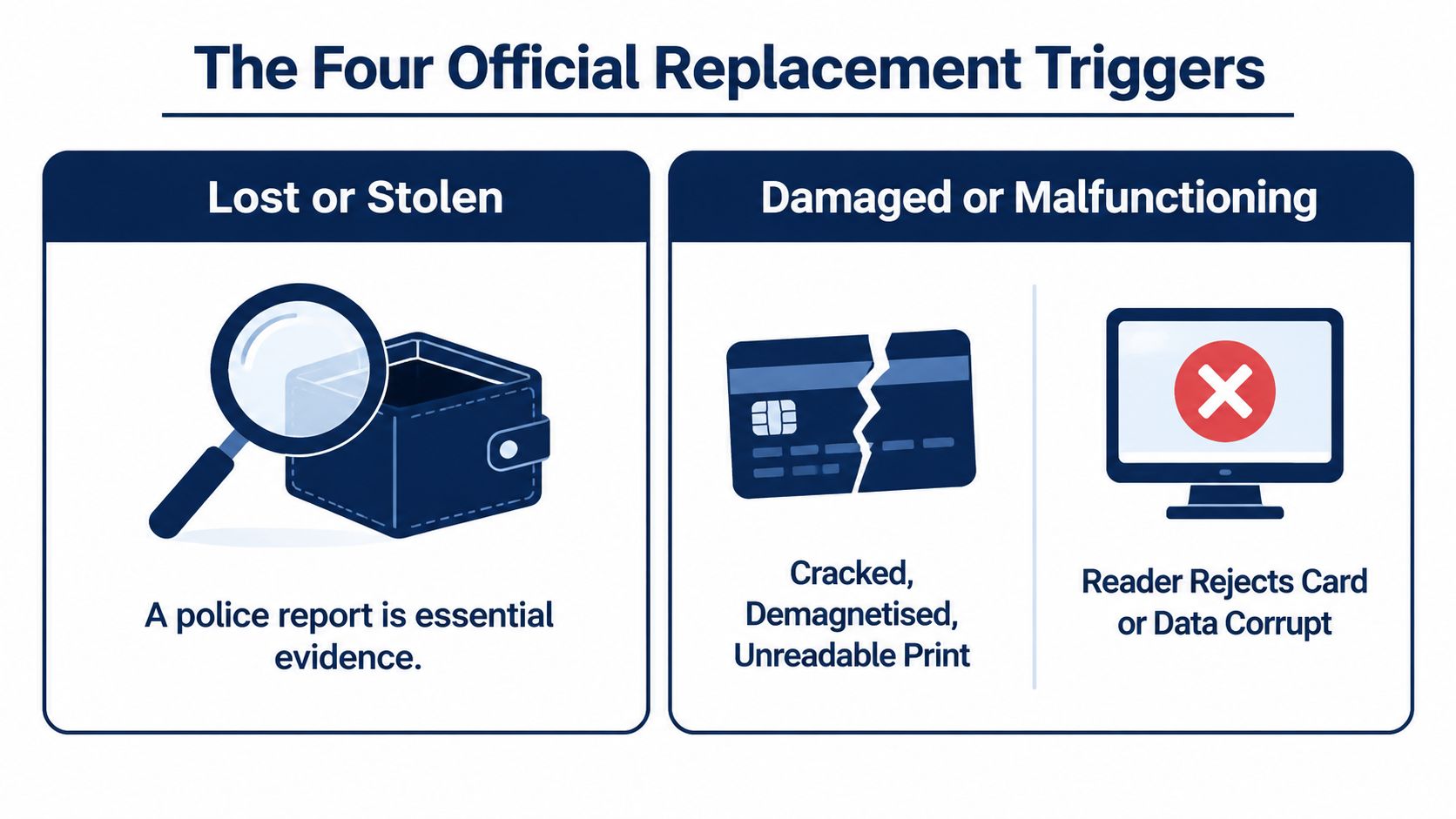
A valid GB driver card used for in-scope driving normally falls into one of these routes. A change of employer does not make an existing valid card a first issue or replacement. The operator should update its driver and employer records, while the card remains connected to the driver.
Replacement is different from renewal
An expired or soon-to-expire card belongs in the renewal process. A first-time card is a first issue. A name change, where the driving licence record remains unchanged, does not by itself establish a replacement trigger.
A DVLA-recalled card is also a separate case. Keep the recall communication and follow the instructions issued by DVLA. Do not label the card lost or damaged just because the driver no longer holds it.
For expiry planning, guidance on an expired tachograph card can support an internal briefing. It should not be used to recategorise the application. The depot file should identify the actual event, the selected route and the evidence supporting that decision, so the replacement process remains clear during the cardless working period and any later compliance review.
Documents and Information You Need Before You Apply
A driver may remember losing a card, yet still be unable to complete the application at the depot desk. The address may be outdated, the old card number may be missing, or the available photograph may fail the service requirements. Assemble the records and incident evidence before opening the DfT online service.
Build one application pack
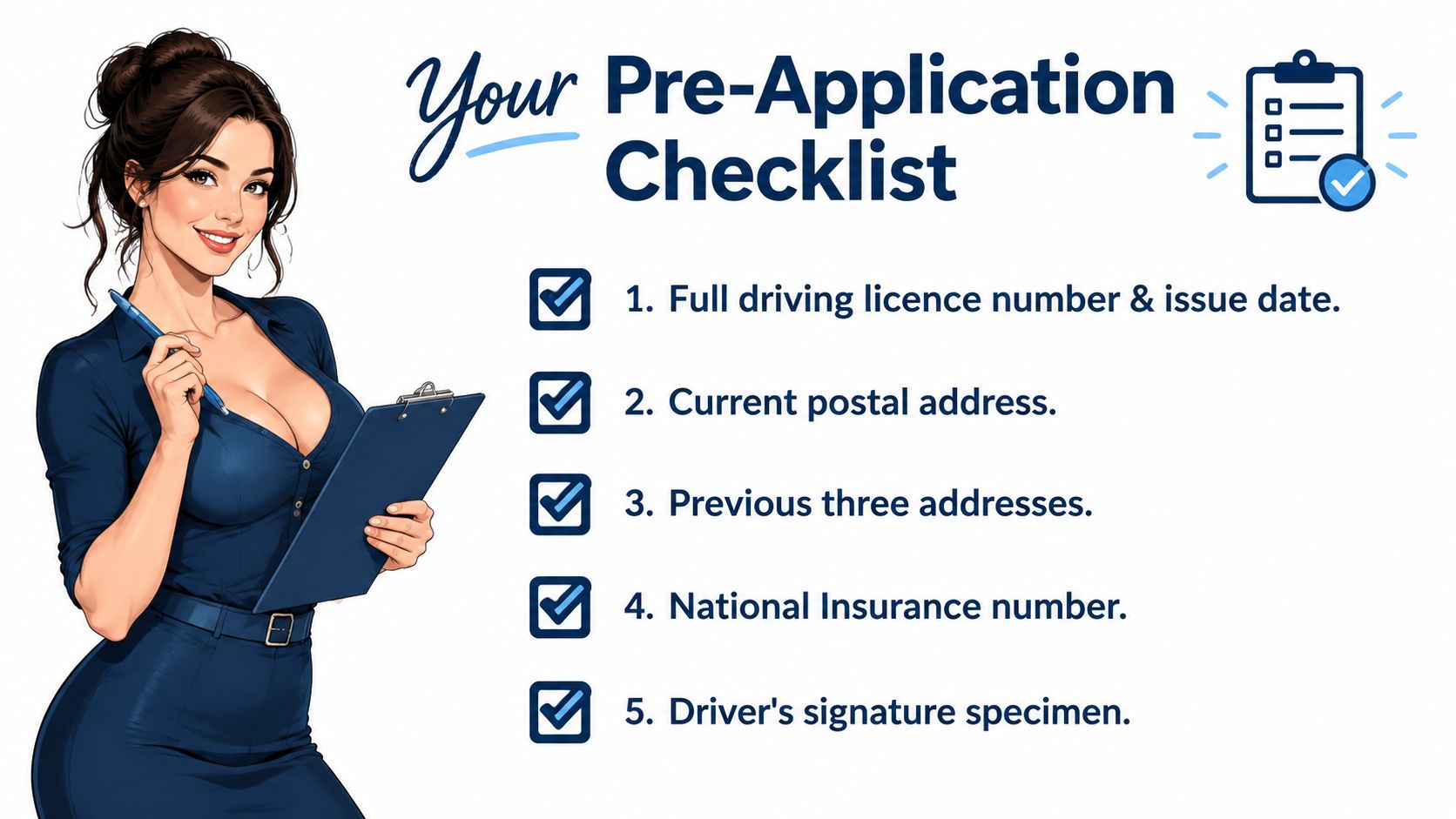
Keep these details beside the person completing the form:
- Driving licence details: Have the full licence number and issue details available, taken from the driver's current record.
- Address history: Record the current address and the previous three years of addresses if held. The current address should match the driving licence.
- National Insurance number: Enter it exactly as recorded. Check unclear characters rather than guessing.
- Existing card number: Read it from the card, a previous download or the operator's records. If the card is missing and the number cannot be confirmed, leave it unresolved rather than inventing one.
- Employer information: Keep the employer name and operator licence number available for the application and the depot file.
- Photograph: Prepare a passport-style digital photo in the format and dimensions requested by the service. It must have been taken within the last month.
- Signature: Use a scanned signature specimen. A typed or printed name does not provide the driver's signature.
- Loss or crime evidence: For theft, retain the crime or loss reference number and place the supporting record with the incident file.
The operator licence number identifies the operator, not the driver. The application therefore sits alongside the operator's own records. Keep the driver profile, vehicle allocation, incident note and later card download connected, so the transport office can explain what happened during the cardless period.
Make the evidence usable later
Use consistent file names and store the documents in a location the transport manager can retrieve. The pack should include the application confirmation, a card photograph or scan where available, the police or loss reference, the driver's statement, vehicle printouts and the eventual delivery confirmation.
This matters when a missing card affects the 28-day download cycle. Record the last successful download, the date the card disappeared and every manual record made afterward. The file should also show the driver's cardless work and the depot checks completed during that period. The 15-day no-card window is easier to defend when the evidence is dated and kept together.
Before submission, ask: would this stack pass a DVSA desk audit today? If not, resolve the missing detail before pressing submit. A tidy file cannot change the facts, but it can demonstrate that the operator identified the problem promptly and managed the driver's records deliberately.
Submitting the DVLA Application Step by Step
A driver may be waiting at the gate with a missing card while planning needs a clear answer. Submit the replacement through the DfT online service using the driver's verified details. Select replacement, not first issue, and choose the reason that matches the incident. That choice affects the application record and the evidence the depot must retain.
Complete the form in the right order
- Sign in with the driver's details. Check the licence information and personal identifiers before continuing.
- Select the replacement reason. Choose lost, stolen, damaged or malfunctioning according to the facts.
- Enter the old card number where known. Confirm it against the card or a reliable download record.
- Provide the photograph and signature. Check the photograph meets the service requirements and that the signature belongs to the driver.
- Check driver and operator details. Compare the employer name and operator licence reference with the traffic office record.
- Complete the declaration. For theft, use the loss or theft declaration shown by the service. For a malfunction, retain the technical evidence and follow any instruction to return the faulty card.
- Submit and save the reference. Record the final confirmation and e-signature immediately.
Log the application date against the driver profile, rather than leaving it in one person's email account. Add the reference and payment receipt to the incident record. Tell planning that the application is submitted, while keeping controlled records for the cardless period. Submission does not by itself resolve the driver's hours evidence or the depot's download obligations.
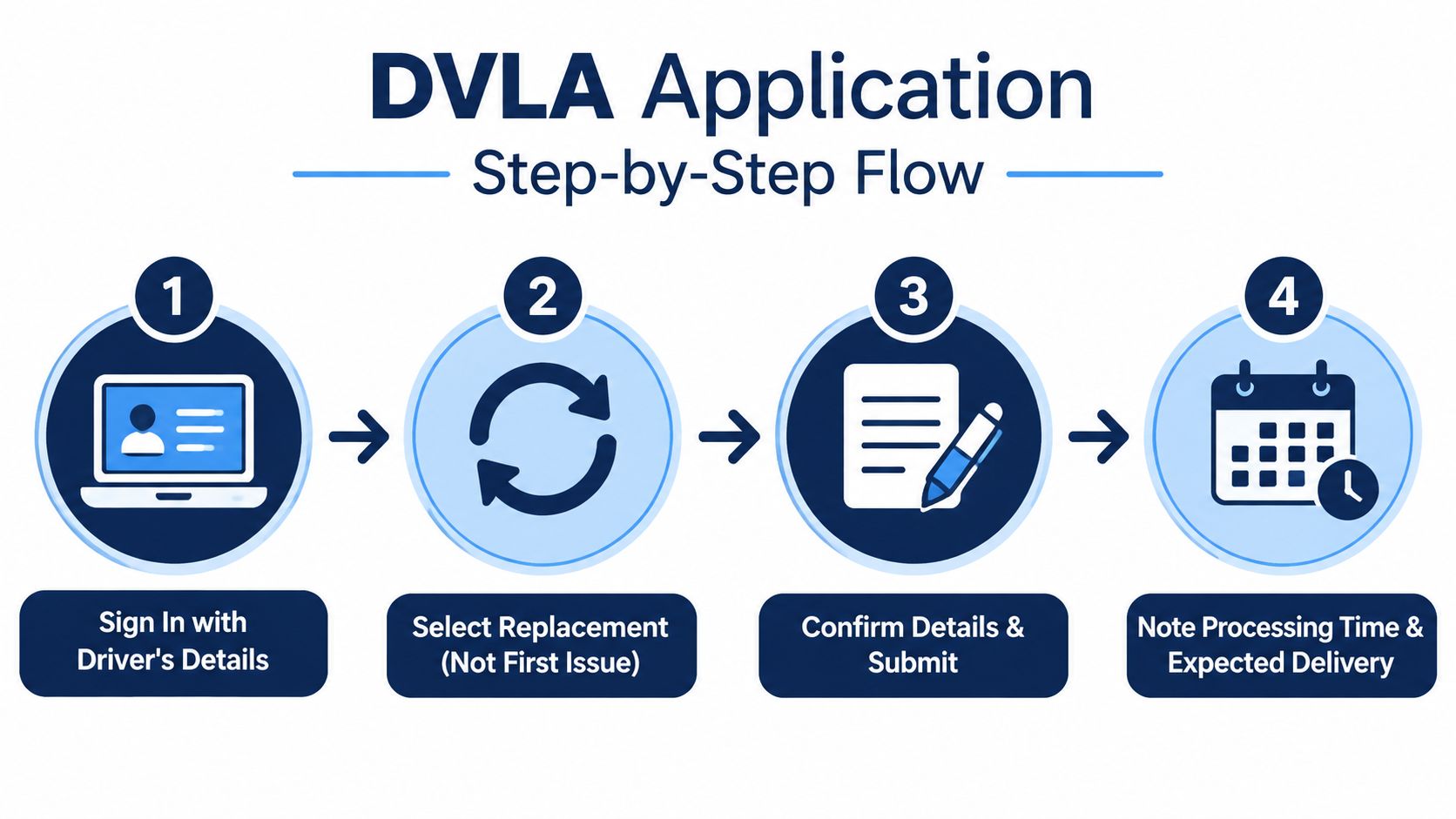
Identity and reason errors often create avoidable follow-up. Choose the accurate option, even if another appears quicker. Keep the confirmation with the driver's statement, printouts and other cardless-period records, so a future DVSA review can connect the application to the work performed.
The visual process works well for driver briefings. It gives the traffic office a short, repeatable explanation without relying on an informal email.
Fees, Timelines and the 7-Day Application Window
A replacement application can be submitted promptly, but the fee depends on the transaction selected. A lost or stolen replacement costs £19. A first GB driver digital tachograph card costs £32, while renewing an expired card costs £19. Check the payment option shown by the online service and store the receipt with the application reference. Choosing the wrong application type can create avoidable follow-up for the traffic office.
The three clocks still need separate entries in the depot's incident record.
| Item | What to record and do |
|---|---|
| Replacement application | Submit within the 7-day application window already set out in the guidance. Log the discovery date, submission date, reference and payment receipt. |
| No-card driving | Manage the permitted 15-day period under the rules covered elsewhere. Give the driver written instructions and review planned work against the available records. |
| Driver-card download | Keep the operator's 28-day download cycle under review. Check the last successful download, schedule the next one and record how the missing card affects the download plan. |
These clocks do different jobs. The seven-day requirement concerns making the application. The no-card concession governs whether the driver can continue working during the gap. The download cycle remains an operator control, so a missing physical card should not disappear from the fleet's download calendar.
Set one owner for the incident record, even if planning, payroll and compliance each hold part of the evidence. Record when the driver reported the problem, when the application was made, what payment was taken and which duties fall inside the gap. Keep the application reference with the driver's signed statements, printouts and other supporting records. That file gives a future DVSA visit, or a Traffic Commissioner hearing, a clear line from the missing card to the work completed.
A replacement request does not remove the need for a controlled plan. If delivery takes longer than expected, review the driver's allocation before the next shift rather than relying on an informal assurance that the card is on its way. Fast submission helps, but documented decisions protect the operator when the depot's timetable moves faster than the card process.
Driving Without a Card and Keeping Hours Records Clean
A driver discovers the card is missing at the gate, with a loaded vehicle waiting and the first delivery already planned. The no-card period must then be controlled shift by shift. Under the retained tachograph rule, a driver with a lost, stolen or faulty card may continue without one for up to 15 calendar days, or longer only where necessary to return the vehicle to base, provided the driver can show why the card could not be produced or used. Keep the retained legislation on replacement cards and driving without a card with the incident file.
Put the driver's record in the vehicle
At the beginning and end of every affected duty, the driver should make the required manual record or printout. It must accurately cover activities and be signed where required. The driver should carry those records in the vehicle and hand them to the traffic office after the shift.
The vehicle unit still needs checking. Log the no-card oper
replacement tacho carddriver cardDVLA tachographUK haulage compliancefleet tachograph downloads