· 11 min read
Avoid DVSA fines: UK fleets' playbook when a tachograph card expires
UK playbook for drivers and fleet teams when a tachograph card expires. Immediate steps, GOV.UK renewal routes, £19 fee, 15 working days rule, data...
Avoid DVSA fines: UK fleets’ playbook when a tachograph card expires
An expired driver digital tachograph card cannot legally be used to record driving, and continuing to work without renewing it exposes both driver and operator to enforcement action. The moment you notice the expiry, stop recording on that card, switch to manual entries or VU printouts, and start the renewal application via GOV.UK, phone, or post. Apply at least 15 working days before expiry where you can, and download the card’s data before it goes anywhere near a bin. The standard renewal fee for a GB card is stated by official government sources.
TL;DR:
- Drivers must cease recording on their expired cards immediately and switch to manual entries or printouts to remain compliant.
- Applying for renewal at least 15 working days before expiry is essential, with a five-day buffer recommended to avoid delays.
- If a card is lost, stolen, or damaged, drivers can drive for up to 15 days with manual records, but only if they keep proper documentation and report the issue promptly.
- Data should be downloaded before disposal, with retention periods of 28 days domestically or 56 days for international journeys, to ensure audit readiness.
- Automation tools help monitor expiry dates and schedule downloads, reducing compliance risks linked to manual tracking and reliance on DVLA reminder letters.
Table of Contents
- What happens when your tachograph card expires
- How to renew your driver digital tachograph card
- Costs and timing: fees and expected dispatch
- Driving without a valid card: the narrow exceptions
- Data retention for expired cards: downloads and disposal
- Practical checklist for drivers and transport managers
- How automated compliance tools cut expired-card risk
- A transport manager’s quick playbook when a card expires
- OperatorCompliance: preventing the next expired card
- Sources
- FAQ
What happens when your tachograph card expires
An expired card stops being valid evidence of who was driving and for how long. INF177B, the DVLA and DVSA’s official leaflet on driver card matters, states plainly that you cannot drive if your card has expired according to official guidance. That is not a grey area open to interpretation by a sympathetic enforcement officer at the roadside.
Once a card lapses, the vehicle unit no longer has a valid driver identity to record against. Enforcement officers checking a vehicle at the roadside, or DVSA staff auditing an operator’s records later, will ask for the card itself, the vehicle unit (VU) printouts covering the period in question, and any manual records kept in the interim. A driver who has kept none of these has effectively left a gap in their working record that enforcement will read as unaccounted-for driving time, whatever the actual explanation.
It is worth being clear about the difference between an expired card and a lost, stolen, or damaged one. Expiry is predictable. You know the date several years out, which is the typical validity period of a driver card, as confirmed by nidirect’s guidance on tachograph card renewal. Loss, theft, and malfunction are unplanned events with their own short-term allowances, covered separately below. Treating an expired card as though it qualifies for the same leniency as a stolen one is a mistake that catches out drivers who assume “I’ll sort it later” is an option.
Responsibility splits between driver and operator, but neither gets to point at the other once enforcement is involved:
- The driver must not drive using an expired card and must apply for renewal in good time.
- The transport manager or operator should be monitoring card expiry dates across the whole driver pool, not relying on the driver to remember.
- Both share the burden of retaining evidence (printouts, downloaded files) for whatever period the card was invalid.
- Ignoring an expiry notice and hoping DVSA won’t check is, according to industry guidance from FleetGO, one of the most common and avoidable compliance failures operators report.
How to renew your driver digital tachograph card
Renewal itself is not complicated, but the channel you use depends on your situation. GOV.UK offers three official routes, and picking the wrong one wastes the very days you cannot afford to lose.
1. Online, for GB licence holders with no changes to their details. The Gov is the fastest route if your name, address, and photo are unchanged. You will need your driving licence number and payment card details ready before you start. The service was specifically built to speed up processing, according to the DVLA’s own account of developing the online tachograph service, so it remains the quickest option for straightforward renewals.
2. By phone, again for GB licence holders where nothing on the card needs to change. DVSA and DVLA publish a renewal phone line on the GOV.UK application page, and this route suits drivers without easy computer access, or those who would rather talk through an unusual case with an adviser before submitting anything.
3. By post, using form D777B, for non-GB licence holders or anyone who needs to update their photo. The D777B application form is the one to use when your circumstances do not fit the online or phone routes cleanly, for example a licence issued outside Great Britain, or a case where DVLA needs a fresh photograph on file.
Before starting any of the three, have the following to hand:
- Your driving licence number, exactly as it appears on the licence.
- Your existing (or most recently expired) tachograph card, so you can quote its number.
- A recent passport-style photo if applying by post or if your existing photo needs updating.
- Proof of identity documents, if requested, particularly for non-GB applicants.
- A payment card, for online or phone applications, since GOV.UK accepts Visa, Mastercard, and Delta.
If you are already past the expiry date, apply immediately rather than waiting for a “better” moment. There genuinely isn’t one. One case worth flagging to any transport manager: if a card has been expired for more than five years, the driver’s record may have been archived or deleted under standard data-retention practice, meaning the driver could need to reapply as a first-time applicant rather than a straightforward renewal. That distinction affects both the fee and the paperwork, so check the exact status before assuming a simple renewal form will do.
Pro Tip: Set your renewal reminder for 20 working days before expiry, not 15. The INF177B guidance recommends applying at least 15 working days ahead, but that assumes no delays on DVLA’s end. A five-day buffer costs you nothing and saves you from a Friday-afternoon panic when the card hasn’t arrived.
Costs and timing: fees and expected dispatch
Renewing a UK driver digital tachograph card costs £19, whether you’re renewing an expired card or replacing one that was lost or stolen. A first-time GB card, for a driver who has never held one before, costs £32. Both figures come directly from the GOV.UK application page, which is the only source to trust on this, since third-party guides occasionally lag behind fee changes.
Payment works differently depending on channel:
- Online and phone applications: paid by Visa, Mastercard, or Delta at the point of application.
- Postal applications via D777B: the fee is submitted alongside the paper form, with payment instructions detailed on the form itself.
- No cash payments are accepted through any GOV.UK digital or phone channel.
On timing, DVSA’s guidance is to apply at least 15 working days before your card expires, which is roughly three working weeks. That figure isn’t a worst-case buffer; it’s DVLA’s own stated processing expectation, and it assumes nothing goes wrong with your application. Build a rostering contingency around it. If a card hasn’t arrived by day 12 or 13 after applying, chase it rather than waiting for the deadline to arrive and discovering there’s a problem with no time left to fix it.
Driving without a valid card: the narrow exceptions
Expiry gives you zero driving allowance. Loss, theft, damage, or malfunction give you a limited one, and the two situations get confused more often than they should.
If your card is lost, stolen, damaged, or has genuinely stopped working, you may continue driving for up to 15 calendar days without it, or longer if that’s what it takes to get the vehicle back to its operating centre, provided you can show the loss or fault was unavoidable. This allowance exists precisely because these events are unpredictable in a way expiry never is.
While the allowance applies, three things must happen without exception:
- Print out a VU record at the start and end of each day, showing the driver’s activity for that period.
- Keep a manual record on the reverse of the printout, or on a separate sheet, covering breaks, other work, and rest periods the VU doesn’t capture automatically.
- Report the loss, theft, or damage to your employer immediately, and apply for a replacement card without delay, since the allowance is not indefinite.
Note the standard applied here matches the one for expiry in principle: no allowance without evidence. “I forgot it at home” or “I misplaced it somewhere in the cab” does not meet the bar of unavoidable loss, and enforcement officers know the difference. Employers should treat any driver reporting a lost or damaged card the same way they’d treat an expired one operationally: fast application, careful record keeping, and a clear paper trail showing exactly when the problem started and when it was resolved.
Data retention for expired cards: downloads and disposal
Before an expired card goes anywhere near the bin, download its data. That single step protects both driver and operator if enforcement ever asks for historical activity covering the period the card was still in use.
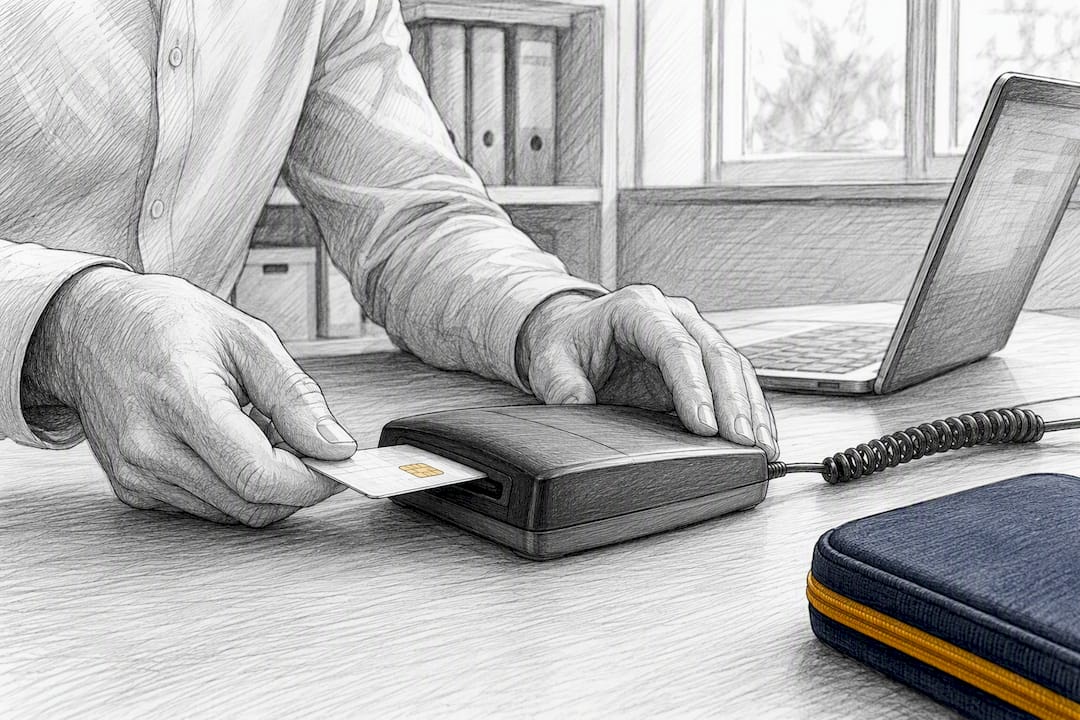
Retention periods depend on the type of journey. Domestic UK operations generally require 28 days of retained data, but INF177B notes that international journeys between the UK and EU can require 56 days instead, roughly double, because cross-border enforcement checks reach further back. Get this wrong in the wrong direction, and you may find yourself unable to produce data that a DVSA officer or the Traffic Commissioner is legally entitled to see.
Practical steps for staying on the right side of this:
- Download the card’s full data before disposal, not just the most recent trips.
- Label each file clearly with driver name, card number, and the date range it covers.
- Store downloaded files in a central, audited location rather than scattered across individual laptops or phones.
- Retain the physical card itself for the enforcement window, since a downloaded file alone may not satisfy every check.
- Remember the five-year rule: cards expired for longer than that may have had their underlying DVLA record deleted, so don’t assume you can always retrieve missing data retroactively.
Pro Tip: Treat the download step as part of the renewal process, not an afterthought once the new card arrives. Cards get thrown away in the gap between “I’ve got my new one” and “I should probably keep the old data somewhere,” and that gap is exactly when evidence goes missing. Understanding the 28 and 56-day download rules properly avoids this trap entirely.
Practical checklist for drivers and transport managers
Fixing an expired card and preventing the next one from catching you out are two different jobs, and both need a checklist rather than good intentions.
For the driver, the moment you spot the expiry:
- Stop using the card to record driving immediately, and switch to VU printouts and manual entries.
- Apply for renewal the same day, via whichever channel suits your situation, GOV.UK online, phone, or D777B by post.
- Download any remaining data from the card before it’s discarded.
- Tell your transport manager or operator straight away, in writing if possible, so the gap is documented rather than discovered later.
For the transport manager, the fix is structural rather than reactive:
- Run a card expiry report across every driver on the fleet at least monthly, not just when someone flags a problem.
- Schedule renewals proactively against the 15-working-day guidance, building in the extra buffer mentioned earlier.
- Enforce a consistent download cadence for every card nearing expiry or replacement, so no gaps appear in the audit trail.
- Set an escalation path for delayed replacements, so a driver isn’t left guessing whether they can still be rostered.
None of this is complicated in isolation. The problem is scale: a fleet of forty drivers has forty expiry dates to track, and a spreadsheet updated sporadically is how gaps happen. Reading up on how to operate a digital tachograph correctly day to day reduces the chance of these situations arising at all.
How automated compliance tools cut expired-card risk
Relying on a DVLA reminder letter as your only warning system is a gamble most transport managers wouldn’t take deliberately, yet it’s exactly what happens by default without a proper monitoring process in place. Letters get misfiled, addresses lag behind moves, and a driver on annual leave in another country doesn’t see post arriving at home.
A central dashboard that tracks every driver card’s expiry date alongside licences, CPC, and vehicle documents removes that single point of failure. Operatorcompliance’s approach to this problem covers several of the exact pain points raised above:
- Automated expiry alerts that flag a card approaching its 15-working-day renewal window, rather than waiting for the DVLA letter.
- Scheduled tachograph download reminders, so data comes off cards before disposal rather than after the fact.
- Multilingual driver support across English, Polish, Romanian, Lithuanian, and Bulgarian, useful where a mixed-nationality driver pool means renewal guidance needs to land clearly the first time.
- Audit-ready exports that assemble the evidence a Traffic Commissioner or DVSA officer would ask for, without a manager hunting through folders the night before a visit.
The tachograph analysis features map directly onto the manual checkli
tachograph card expired