· 13 min read
Fuel cards vs fuel monitoring for fleet control
Compare fuel cards with fuel usage monitoring software for UK fleets, including control, reporting, fraud checks and where each fits.
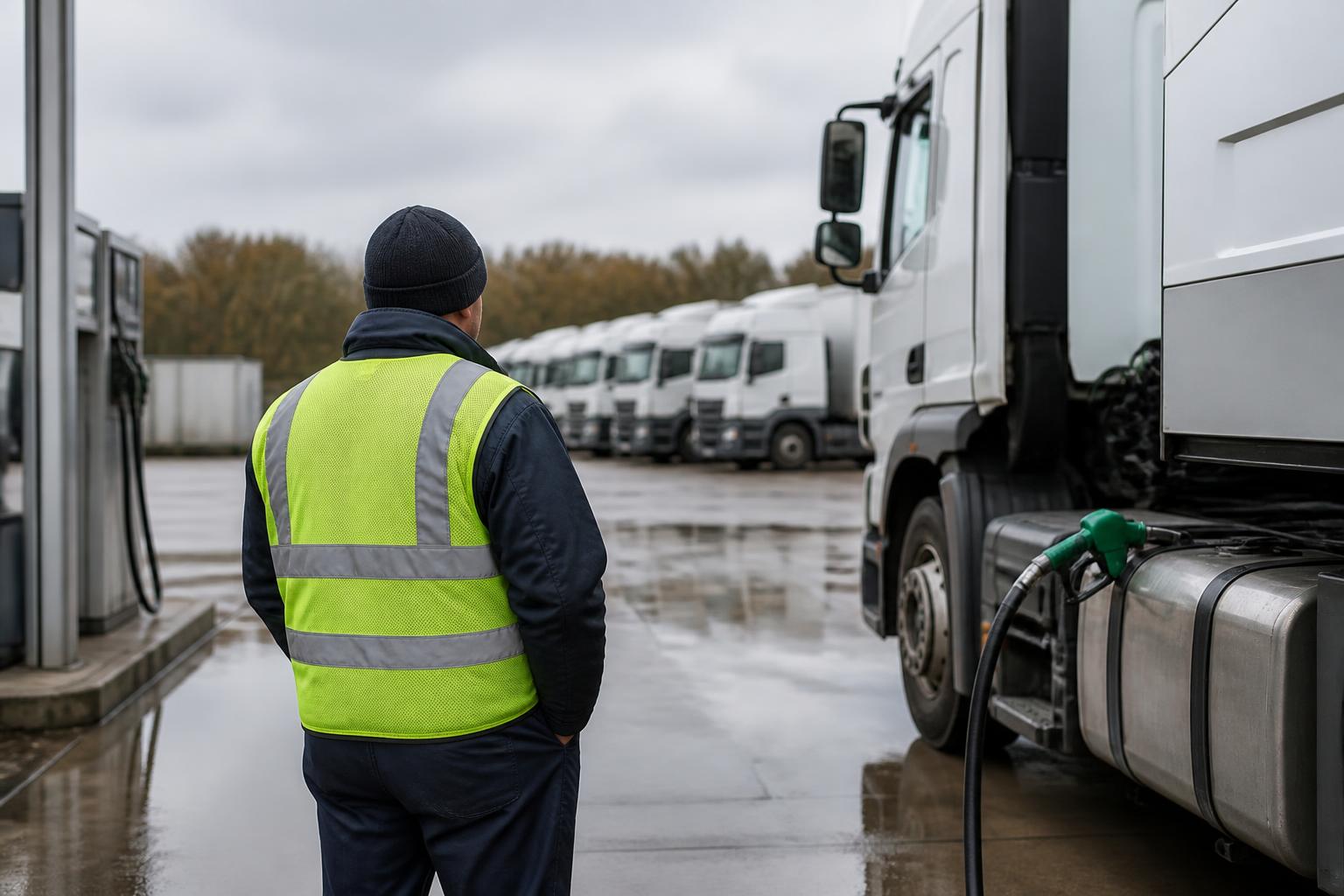
A fuel card helps control where and when fuel is bought. Fuel usage monitoring software helps control what happens to that fuel afterwards. For most UK operators, those are not the same job.
If you only need tighter purchasing rules, consolidated invoices and basic transaction reporting, fuel cards can do a lot. If you need to explain fuel spend against vehicles, drivers, routes, idling, defects, missed inspections, tachograph records and the evidence expected in an operator file, card data on its own runs out quickly. In practice, the strongest setup is often not a choice between one or the other, but a clear view of what each system is there to prove.
What fuel cards do well and where they stop
Fuel cards are useful because they put structure around fuel buying. Instead of cash claims, scattered receipts and bank card statements, you get a managed purchasing method with agreed suppliers, product restrictions and a transaction record tied to a card number, vehicle registration or driver.
For UK operators, the practical strengths are straightforward.
First, fuel cards simplify administration. A transport office can reconcile one provider invoice instead of chasing paper receipts from drivers. VAT handling is usually cleaner because the supplier invoice is already consolidated and easier to match to accounting records.
Second, they improve purchase control. Depending on the card and provider rules, you can restrict use by fuel type, geography, time, merchant category or cardholder. That matters for mixed fleets where diesel, AdBlue or other products need to be separated properly.
Third, they provide an early warning of obvious misuse. If a van registered off the road uses fuel at 03:00, or a card assigned to one vehicle is used hundreds of miles away from its planned work, the transaction report can show it. Some providers also flag duplicate fills, unusual litre volumes or repeated out of area use.
Fourth, they can support internal cost reporting. Even without telematics, operators can split fuel spend by depot, vehicle group, contract or driver if the card structure is set up properly.
That is all useful. But it is still purchase data, not fuel performance data.
A fuel card tells you that fuel was bought. It does not reliably tell you why consumption changed, whether the engine was idling excessively, whether route planning caused the increase, whether a driver changed behaviour, whether tyre pressures or a defect affected economy, or whether a vehicle that should have been VOR somehow continued operating.
It also does not give a complete compliance picture. A transport manager dealing with operator-licence obligations needs more than spend reports. They need vehicle records, inspection schedules, MOT or annual-test dates, safety inspection evidence, tachograph analysis, driver licence checks, Driver CPC and DQC status, and a document trail that can be produced if DVSA calls or the Traffic Commissioner asks questions.
Fuel card data has another practical limit. It depends on the discipline of the card process. If drivers share cards, enter the wrong odometer, use fallback payment methods, forget registration prompts or buy fuel for ancillary equipment, the reporting quality drops. A transaction list may still balance financially, but it becomes weak as operational evidence.
For UK fleets, this matters because operator control is judged through records that stand up when challenged. In a public inquiry or audit, being able to say fuel was purchased through a controlled card programme is helpful. Being able to show which vehicle was in service, which driver used it, what inspections were due, what defects were reported, what tachograph activity shows, and what action was taken, is far more useful.
What fuel usage monitoring software adds
Fuel usage monitoring software adds context, trends and follow-up. It is not limited to the purchase event. It helps you understand consumption across time, vehicles, routes and drivers, then act on what the data shows.
The first gain is trend visibility. Instead of isolated transactions, you can review fuel use per vehicle over weeks and months, often by ISO week, by depot, by fleet type or by contract. That helps you spot gradual deterioration that would never stand out on a card invoice. A single bad fill may mean little. A six week decline in mpg across one unit or one route is a management issue.
The second gain is exception reporting. Good monitoring software should make outliers easy to find. That may include unusual fuel consumption, gaps between expected and actual mileage, inconsistent odometer records, vehicles with rising idle time, or patterns that suggest route inefficiency, unauthorised use or possible card misuse. The point is not just to store data, but to direct attention.
The third gain is operational follow-up. Once a trend or exception appears, you need a way to connect it to action. Did the workshop inspect the vehicle for a fault? Was a driver briefed? Was a tyre issue found? Was a route changed? Was the vehicle marked VOR and taken out of service? A proper control process records not just the anomaly, but the decision and evidence that followed.
This is where fuel usage monitoring software becomes more valuable when it sits alongside wider fleet records. If rising fuel consumption coincides with defect reports, harsh driving, poor tachograph discipline, missed PMI schedules or prolonged idling, the operator can see the full picture. If fuel use rises after a vehicle change, body change or route change, that can be explained too.
For transport managers, software also helps separate one-off noise from genuine risk. A fuel card report may trigger suspicion, but a monitoring platform can show whether the issue is repeated, isolated to one driver, linked to one vehicle class, or tied to a known operational change.
Some operators now also want system-to-system automation. If fuel transactions, telematics feeds, job records and vehicle master data can move between platforms through a REST API or webhooks, staff spend less time exporting CSV files and less time correcting duplicate records. The benefit is not technical for its own sake. It is better control, fewer manual errors and a cleaner audit trail.
That said, not every fleet needs a complex analytics platform. The test is practical. If your current process cannot explain fuel movement beyond the invoice, cannot evidence who reviewed anomalies, and cannot tie fuel issues back to vehicles and drivers, then software that monitors usage properly will add something a card alone cannot.
Fuel card data vs vehicle and driver records
The main difference is that fuel card reporting is transactional, while transport management records are evidential.
A fuel card report usually shows date, time, site, litres, value, card reference and sometimes mileage input. That is useful for accounts and for a first level of control. But it does not replace the records an operator needs to run a compliant fleet.
Vehicle records need to show more than spend. They should include registration details, ownership or lease information, MOT or annual-test dates, safety inspection schedules, defect history, maintenance documents, tyre activity if relevant, insurance status, and whether the vehicle is active, disposed, or VOR. For some operators, checking insurance details against askMID data from the Motor Insurers' Bureau, or MIB, is also part of routine control, though that is not the same thing as maintaining the full operator record.
Driver records go wider again. A transport office may need to hold driving licence check history, DVLA check results, Driver CPC deadlines, DQC expiry, tachograph card details, infringements, right to work documents where applicable, agency records and signed policy acknowledgements. A fuel transaction cannot tell you whether the driver assigned to that journey was properly checked or whether follow-up happened after an infringement.
This difference becomes important at audit. DVSA does not assess control by looking at fuel invoices alone. It looks at whether your systems show effective management of vehicles, drivers and records. If a vehicle appears to have been fuelled while it should have been off the road, the relevant question is not only whether the card was misused. It is whether your records show the vehicle was VOR, whether keys and cards were controlled, whether use was prevented, and what evidence exists of the investigation.
The same applies to mileage credibility. Fuel card systems often rely on driver-entered odometer values. Those can be useful, but they are not always reliable enough to stand alone. Cross-checking against maintenance intervals, tachograph mileage, telematics and inspection records gives a stronger picture.
For many operators, this is the real divide between a finance tool and an operator-control system. One tells you what was bought. The other helps you prove what happened, who was responsible, what should have happened under your process, and what you did when there was a gap.
That is why we advise operators to compare fuel reporting against the wider record set they actually need to manage. Our guide to software that keeps your O-licence file ready covers the sort of evidence structure that matters when records need to be produced quickly and in order.
How to compare systems for control and audit trail
When comparing products, start with the controls, not the dashboard.
A system may produce attractive charts and still be weak where it matters operationally. For UK operators, especially those working under an operator licence, the questions should be about who can do what, what is recorded, what can be exported, and whether the evidence would stand up if challenged.
Use a checklist like this.
Controls over records and workflow
Can you assign vehicles, trailers and drivers clearly, without duplicate or ambiguous records?
Can you lock down who can enter, edit, approve or delete fuel, vehicle and driver data?
Can you record status changes such as active, sold, hired out or VOR, with dates and user history?
Can the system require follow-up on anomalies, defects or missed deadlines, rather than just display them?
Can you capture notes, attachments and sign-off against the event itself?
Reporting and exceptions
Does reporting go beyond a transaction list?
Can you compare fuel use by vehicle, driver, depot, route or period?
Can you identify missing mileage, unusual fills, inconsistent odometer entries or fuel use during periods when a vehicle should not have been in service?
Can reports be filtered by date range, fleet group and status?
Can you export evidence in a form that is usable for internal review, accountant queries, insurer questions or DVSA inspection?
User access and audit history
Does each user have their own login?
Are permissions role-based, for example transport manager, workshop, admin, driver or external maintenance provider?
Does the system keep an audit trail of who added, amended, approved or removed records?
Can you see when a document was uploaded, replaced or signed?
If a record changes after the fact, is the original state still traceable?
Exports, integrations and data movement
Can you export data cleanly to CSV, PDF or other common formats without losing the underlying detail?
Is there a REST API for moving vehicle, driver, defect, deadline or fuel-related data between systems?
Are webhooks available so another platform can be notified when a status changes, a document is uploaded, or an exception is raised?
Can the product ingest data from telematics, tachograph analysis or accounting tools without creating duplicate master records?
If you leave, can you extract your data in a usable form?
Evidence and compliance file readiness
Can you attach inspection sheets, defect reports, licence checks, Driver CPC records, DQC evidence and tachograph documents to the relevant vehicle or driver file?
Can you produce a chronological history for a vehicle or driver without manual collation?
Can you show not only that an alert existed, but that someone saw it and acted on it?
Can the system support the kind of documentary order you would want available for a DVSA visit or a Traffic Commissioner hearing?
That last point matters. A report is not the same as evidence. Evidence means records in context, with dates, actions, documents and user history. We cover that in more detail in our article on choosing software that stands up at a DVSA audit.
You may also come across products such as Fleetalyse or Logivo.AI when comparing options in the market. The same checklist applies. Ask what controls exist, what records are retained, how the audit trail works, and whether the system helps you explain exceptions, not just display them.
Which setup suits hauliers, vans, buses and owner-drivers
The right setup depends on fleet type, fleet size and what you are trying to control.
For hauliers running HGVs under a standard national or international licence, fuel cards are usually a baseline tool, not the full answer. Fuel is a major operating cost, but the management task also includes maintenance planning, tachograph compliance, defect handling, trailer records and evidence for the operator licence. In that environment, a card on its own rarely gives enough control. Most hauliers are better served by card purchasing controls plus monitoring software, tied into wider vehicle and driver records.
For van fleets and couriers, the answer depends on complexity. A small local van fleet may get reasonable value from fuel cards alone if the immediate problem is receipt handling and spend discipline. Once the fleet grows, drivers change frequently, or the business needs stronger evidence around servicing, MOT deadlines, licence checks and route efficiency, monitoring software becomes much more useful. If vans operate under goods vehicle operator licensing rules, the need for proper records increases further.
For bus and coach operators, fuel control often sits alongside strict scheduling, workshop planning and annual-test readiness. Consumption needs to be understood in the context of route type, passenger load, idling and depot practice. Here, software that can connect fuel trends to vehicle availability and maintenance follow-up is usually worth more than card reporting alone. Passenger fleets also tend to need very orderly records because downtime, safety events and missed inspections have immediate operational consequences.
For owner-drivers, the decision is more about workload and risk. If you run one vehicle, know every fill personally and mainly want simplified invoicing, a fuel card may be enough for the purchasing side. But even single-vehicle operators still need to keep the operator file in order. Fuel software does not remove the need to track inspections, MOT or annual-test dates, defects, tachograph records, Driver CPC and document evidence. Many owner-drivers start with simple systems, then move to an integrated approach once admin begins to slip.
For mixed fleets, the best answer is often layered. Use fuel cards to control purchasing. Use monitoring to explain consumption and flag exceptions. Use compliance software to hold the vehicle, trailer and driver records that prove management control.
That is the gap we built Operator Compliance to cover. We are not a fuel card provider, and we do not treat fuel reporting as a substitute for operator records. We focus on the controls transport managers actually need to keep vehicles, drivers, deadlines and evidence in order, built by Fleeta Limited around the DVSA Guide to Maintaining Roadworthiness and informed by running trucks under an operator licence ourselves.
If you are comparing systems, our side by side software comparison for operator control and audit readiness is a sensible next step. And if tachograph records are part of the wider picture, our guide to the best tachograph analysis software for small fleets will help you assess that part properly as well.
In short, fuel cards help you buy fuel under control. Fuel usage monitoring software helps you manage what that fuel means. Operators usually need both disciplines, but they should not confuse either of them with the wider record keeping needed to satisfy DVSA and protect the operator licence.
Is a fuel card enough to monitor fuel usage?
Usually not on its own. A fuel card shows where and when fuel was bought, but it does not fully explain vehicle usage, trends, exceptions or the wider records a transport manager needs.
What is the difference between fuel purchase data and fuel monitoring?
Purchase data records transactions. Fuel monitoring uses that data, and sometimes vehicle data, to spot patterns, unusual consumption, missing mileage links or possible misuse.
Do small fleets need fuel usage monitoring software?
Small fleets can benefit if fuel is a major cost or if one person is checking several vehicles. The need usually grows when manual checks become inconsistent or hard to evidence.
Can fuel monitoring software help with operator licence compliance?
Only indirectly. It can support operational control, but operator-licence compliance still depends on keeping vehicle, trailer and driver records, dates, inspections and tachograph evidence in order.
What should transport managers ask a supplier?
Ask what data is captured, how exceptions are flagged, what reports can be exported, whether REST API or webhooks are available, and how the system supports an audit trail.